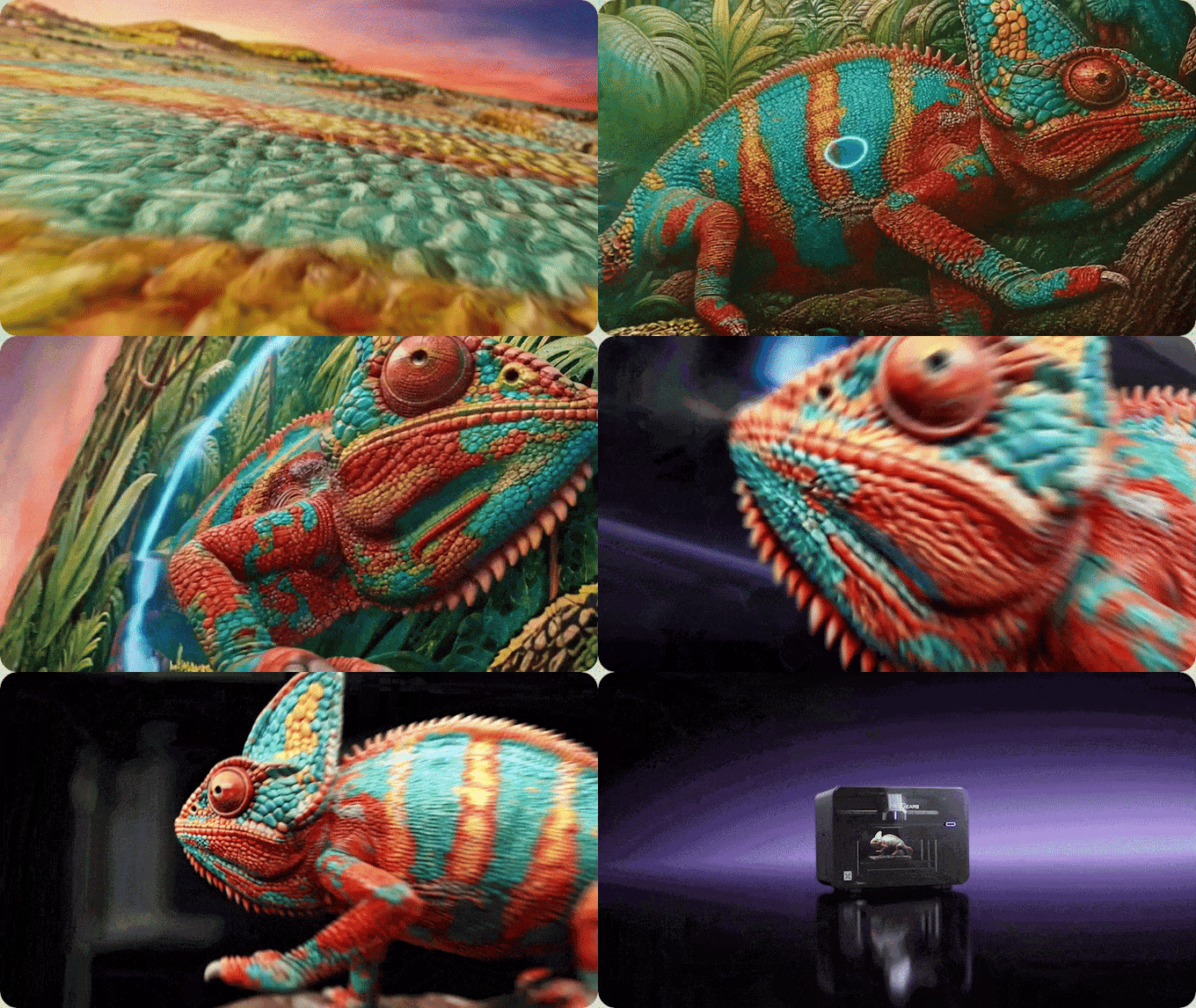
Photo/Animation: HeyGears
A $50,000 Printer Just Got a 90% Discount, and Your Living Room Is the Winner
For as long as full-color 3D printing has existed, it's lived exactly where you'd expect something that expensive to live: behind factory doors, on machines the size of a refrigerator, guarded by a price tag north of $50,000. Desktop 3D printing solved plenty of problems over the past decade, but color was never really one of them — you printed in a single plastic hue and painted the rest yourself, by hand, hoping your brushwork held up under scrutiny.
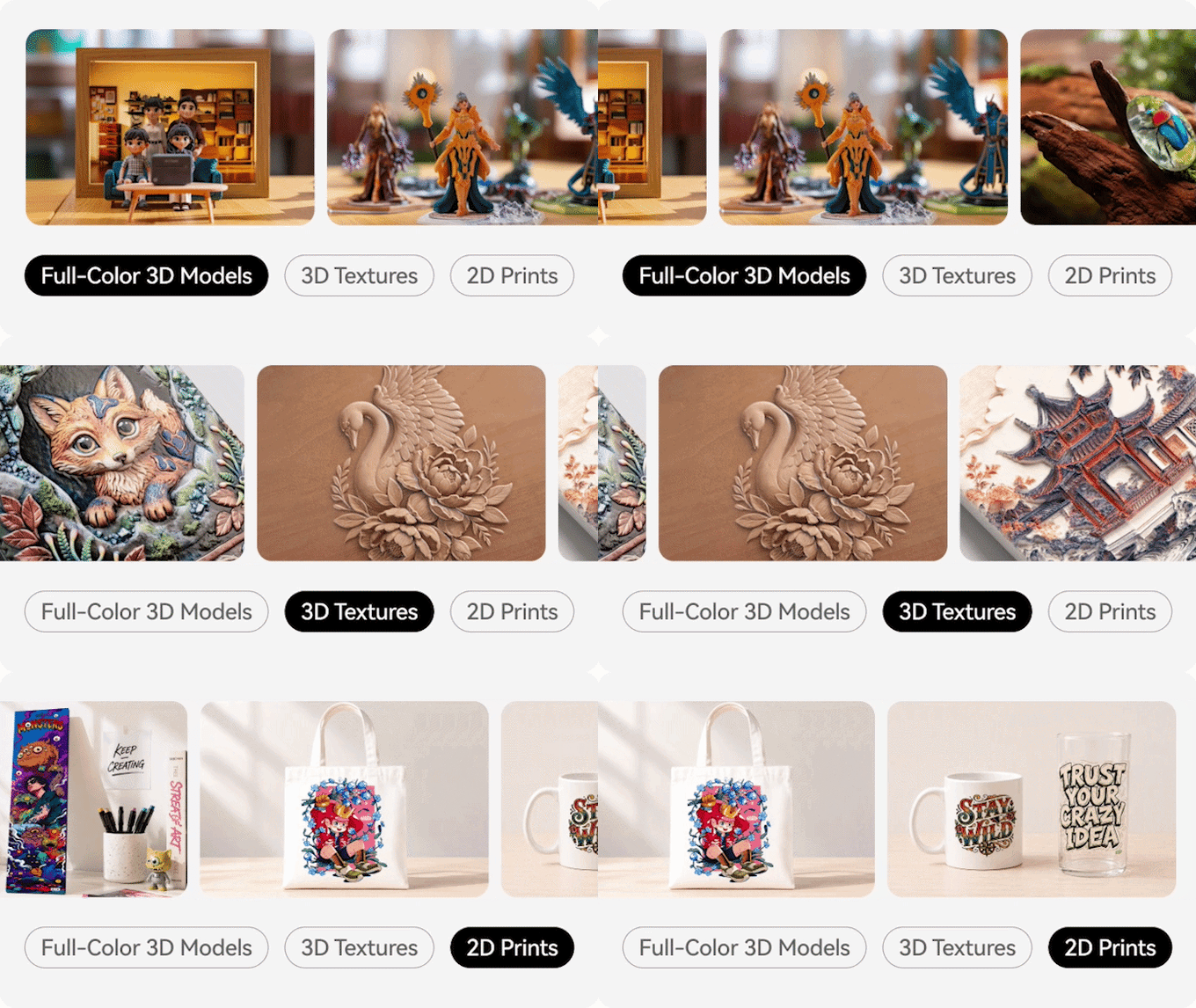
HeyGears' new G1X collapses that entire gap. It's a genuinely full-color 3D printer, small enough for a studio desk, currently funding on Kickstarter at roughly a tenth of what industrial equivalents cost — and it hasn't stopped there. The same machine also does high-resolution 2D UV printing on hard surfaces, raised 3D texture embossing, and direct fabric printing, meaning one desktop unit now covers ground that used to require three or four separate, specialized machines.
Enjoying this? Get new articles by email.
Photo/Animation: HeyGears
The genuinely clever part isn't just that it's cheap — plenty of things get cheap by getting worse. It's that the corners that usually get cut to hit a lower price point are exactly the ones HeyGears left intact. Full-color and transparent sections print together in a single continuous build, at a layer thickness roughly half the width of a human hair. And because the support material is water-soluble, there's no post-print assembly, no snapping off supports and hoping you don't chip the model — you just rinse it. For anyone who's ever budgeted an entire evening for "printing" and another entire evening for "fixing what the printing broke," collapsing that into one step is the kind of unglamorous efficiency gain that actually changes whether a project gets finished at all.
That efficiency is really the whole story here, dressed up as a product spec sheet. Time and cost have always been the two real gatekeepers of creative output — not talent, not imagination, just: can you afford the material, and do you have the hours. A machine that removes a chunk of both doesn't just make 3D printing marginally cheaper. It quietly widens who gets to treat physical prototyping as a casual, low-stakes activity rather than a special-occasion investment — a kid building a full-color figurine on a Saturday, a parent embossing a custom relief onto a leather journal cover as a gift, nobody needing a studio budget or a manufacturing background to justify pressing print.
That widened access is exactly where the interesting brand opportunity sits, too. A tool this flexible — switching between a mug, a leather-textured cover, and a printed t-shirt from the same machine — is practically built for hands-on engagement rather than passive demonstration. An offline pop-up built around letting people design and print their own small object in real time is a far stickier brand moment than another sampling table; it hands someone a genuinely personal object to walk away with, not a flyer. The same logic scales online too: campaigns that invite an audience to submit or customize a design, then actually produce a limited run of it, turn spectators into participants — which is a meaningfully stronger kind of engagement than a like button ever manufactures.
The one honest caution worth naming, and it's the same one that's followed every leap in accessible fabrication technology: putting real production-grade output into more hands always reopens the question of what people are allowed to reproduce. Full-color, photo-real physical objects raise the same intellectual-property stakes as any copier or printer eventually did, just in three dimensions now. Any brand or platform building consumer-facing experiences around this kind of tool needs a genuinely clear policy on what can and can't be printed through it — not as an afterthought, but as part of the product itself, the same way file-sharing platforms eventually had to build real moderation rather than bolt it on after the fact.
None of that undercuts what's actually being unlocked here. A machine like this doesn't just make color 3D printing affordable — it makes physical creativity feel casual again, the way a sketchbook or a box of crayons always has. That's a genuinely rare kind of price drop: not just cheaper access to a tool, but cheaper access to the feeling of actually finishing what you imagined.