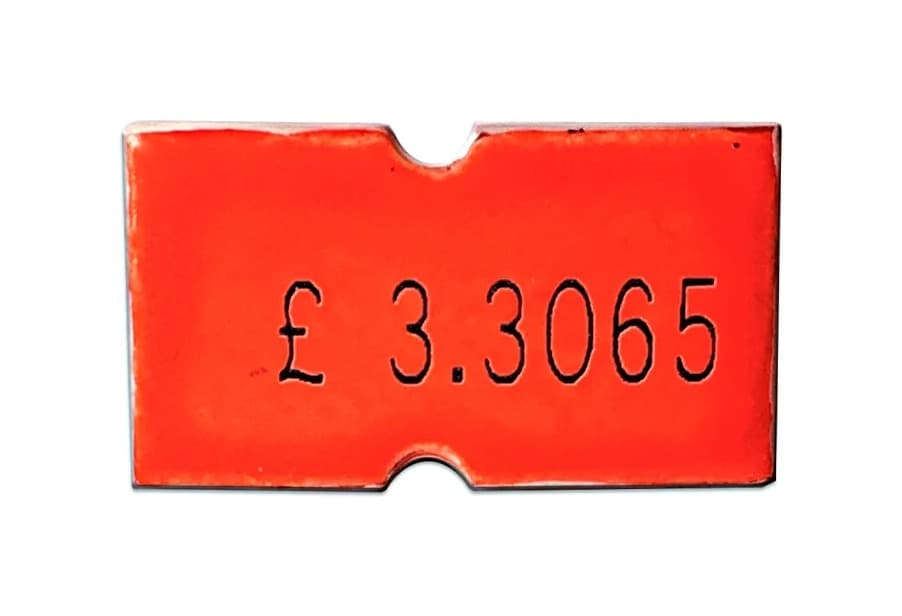
Photo: Lucie Davis
An Artist Turned Disposable Price Tags Into Something People Actually Want to Keep
A price tag exists to be peeled off and thrown away. That's its entire job description — communicate a number, get scanned or glanced at, disappear into a bin the moment its usefulness ends. Artist Lucie Davis looked at that particular kind of disposability and decided it was worth preserving forever.
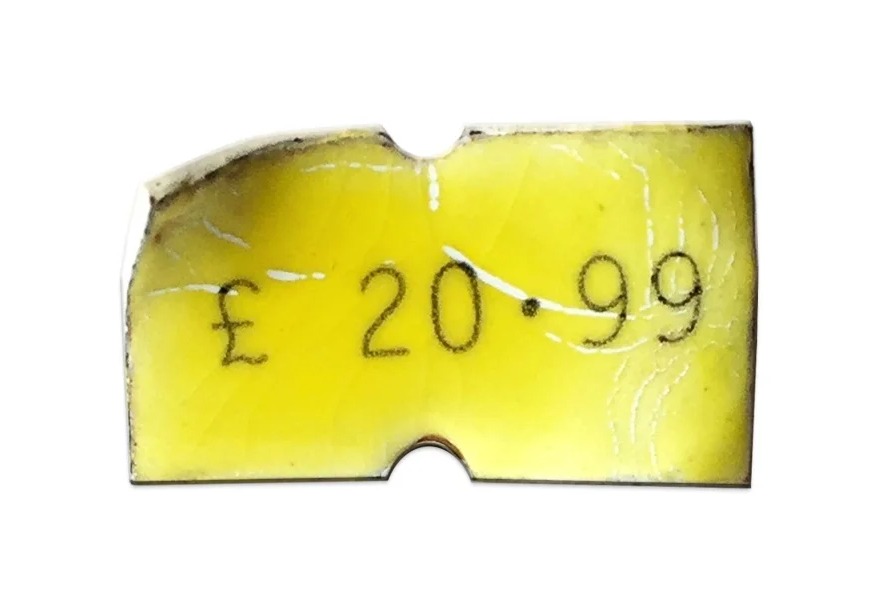
Her new series, Precious Price Tag Pins, recreates the humble retail sticker — creases, printing marks, the small deformations that come from being handled, scanned, and tossed — as individual copper pins finished in kiln-fired enamel. Each piece starts as a laser-engraved metal cutout before being hand-finished with vitreous enamel and fired, a process where small variations in temperature and timing are deliberately built in rather than corrected for, so no two pins ever come out quite the same. The project grew out of something genuinely mundane: Davis spent time working retail during university, and the repeated, unglamorous exposure to price labels — their wear, their creases, their small imperfections — became the very thing she chose to immortalize, following an earlier viral project that did something similar with London's Oyster travel cards.
Enjoying this? Get new articles by email.
Photo: Lucie Davis
What makes this more than a clever material joke is the actual inversion happening underneath it. A price tag is the physical symbol of a transaction — it exists purely to assign value to something else, then vanish once that value has been communicated. Davis's pins take the object that assigns value to everything else and, for the first time, ask what it would mean to assign value to the price tag itself. That's a genuinely disarming move: the least sentimental object in a shop, permanently cast in a material and process usually reserved for jewelry.
That inversion is exactly what gives the piece its collectible pull. A traditional enamel pin usually earns its emotional weight by referencing something the wearer already loves — a band, a show, a place they've been. This series does something trickier: it manufactures meaning out of an object that starts with none. Because the creases and printing marks are treated as design features rather than flaws, and because the firing process guarantees genuine one-off variation, each pin ends up feeling less like merchandise and more like a small, specific artifact — something a person can look at and decide, entirely on their own terms, what it happens to mean to them. That's a rare kind of imaginative space for an object this small to hold open.
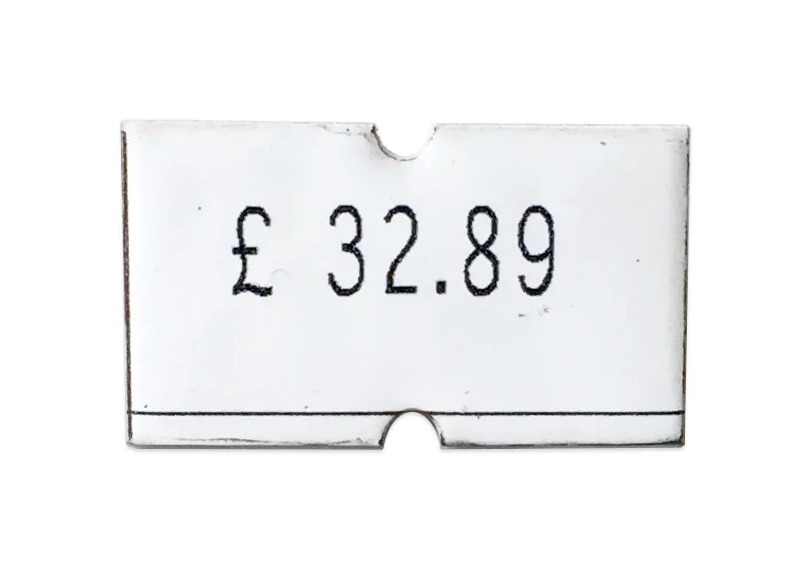
Photo: Lucie Davis
There's a genuinely useful commercial insight hiding inside that idea too, well beyond the art-world framing. A collectible object built around noticing the overlooked details of everyday retail life is, almost by design, a conversation starter — the kind of small object that invites a customer to ask a staff member why a price tag pin looks the way it does, or invites two strangers browsing the same shop to comment on which variation the other picked up. That's a genuinely valuable thing for any retail environment chasing positive, low-pressure social interaction on the floor: an object that turns a fairly transactional space into one with something worth talking about, without anyone needing to be sold anything to enjoy the exchange.
None of that requires every brand to start firing enamel in a kiln. It just requires taking seriously the idea that craft and permanence can be pointed at genuinely unglamorous, disposable parts of a business — the sticker, the receipt, the little slip nobody thinks twice about — and asking whether there's a version of that object someone would actually choose to keep. Davis's answer, in this case, is a small copper pin that quietly argues the most overlooked object in the room might be the most interesting one to preserve.