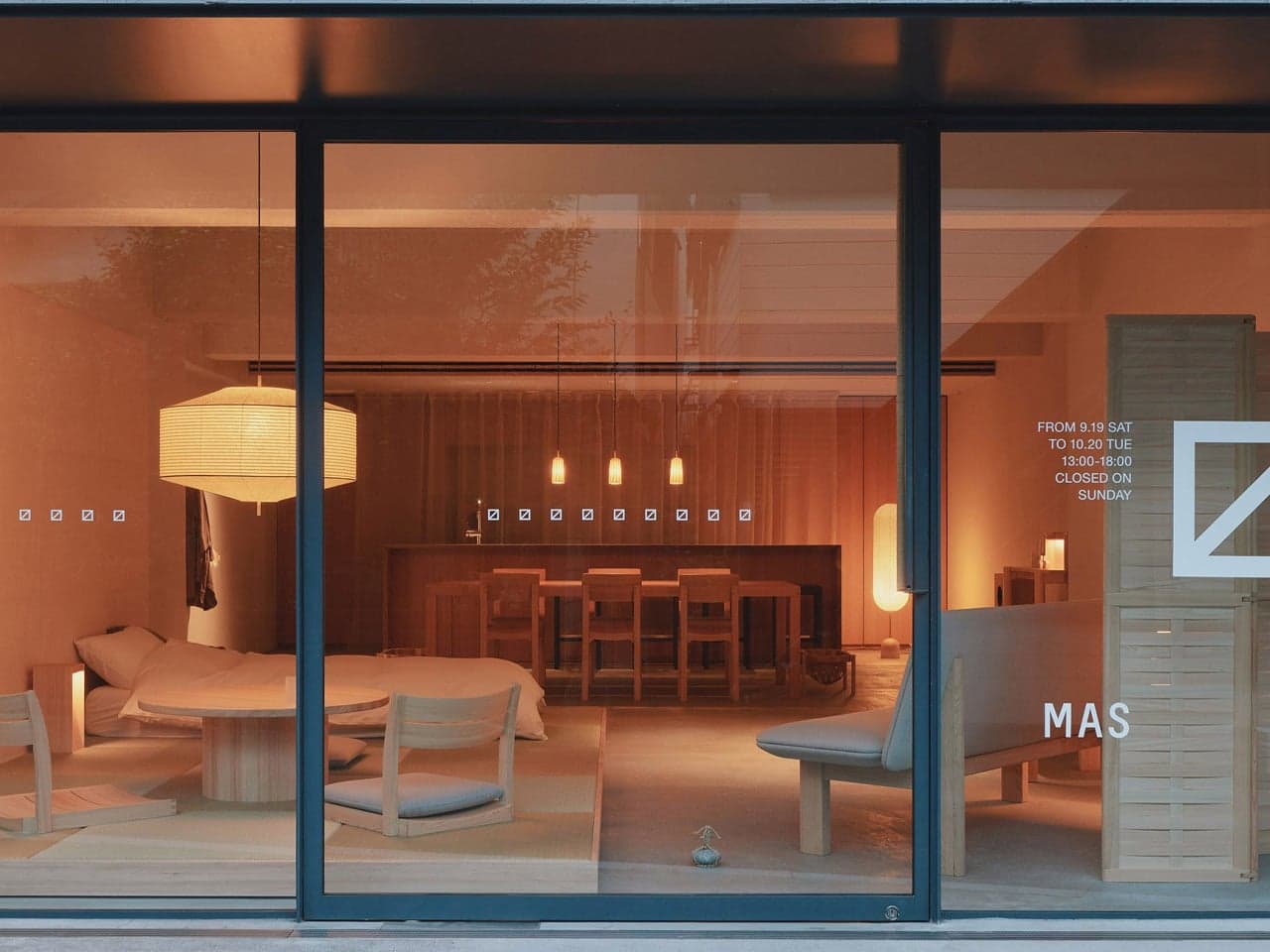
Photo: Karimoku / Yanko Design
Karimoku Turned Its Tokyo Showroom Into a Japanese Inn and Barely Mentioned the Furniture
Push aside the noren at Karimoku Commons in Tokyo's Aoyama right now and the showroom quietly stops being a showroom. In its place: a reception, a lounge, a sleeping room, and the low light and worn-timber warmth of a traditional Japanese inn. The exhibition is called Oyado MAS, it runs until October 20, and it was conceived by Karimoku's design label MAS together with spatial director Wataru Kumano. The furniture is technically the product. You'd be forgiven for forgetting that halfway through.
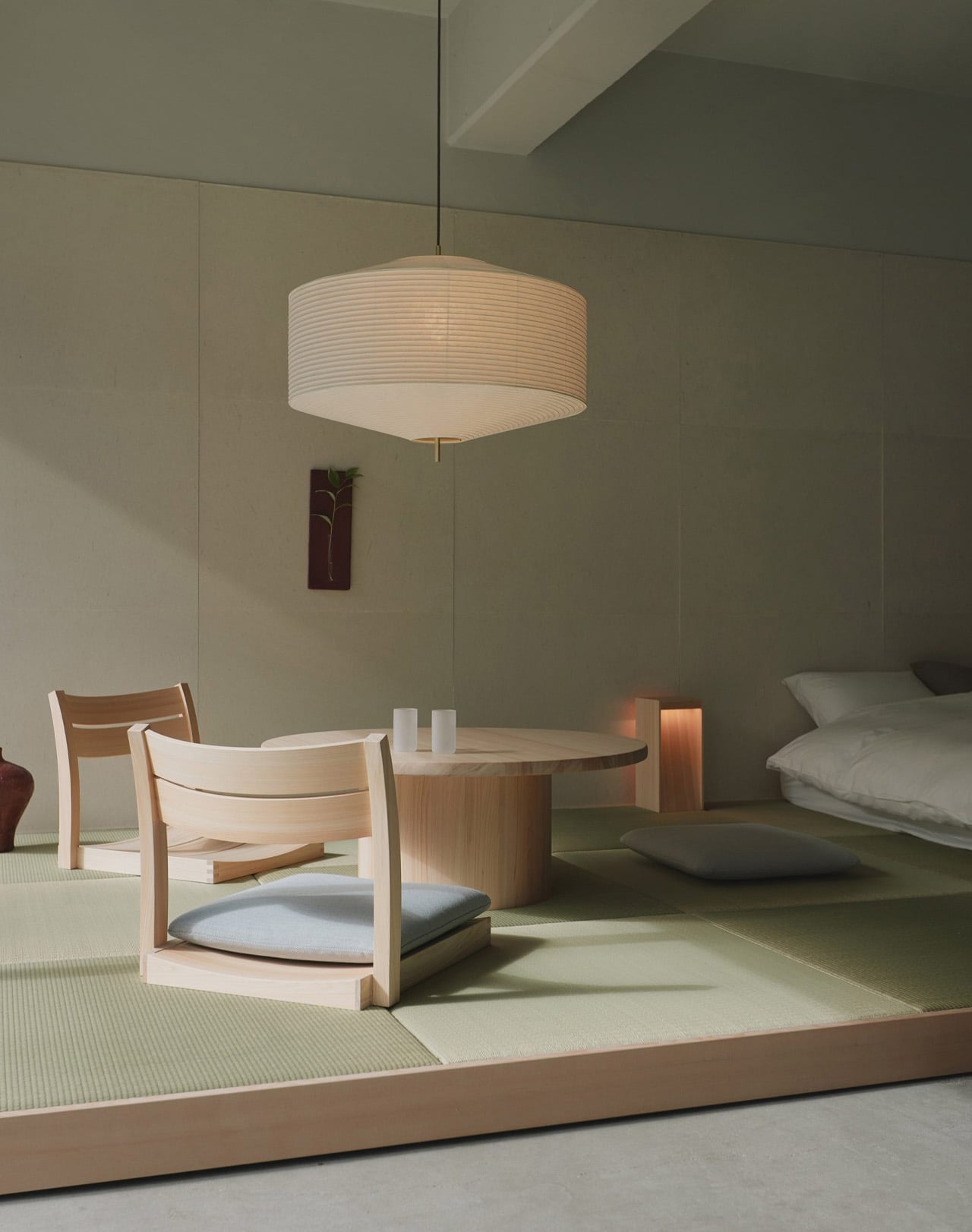
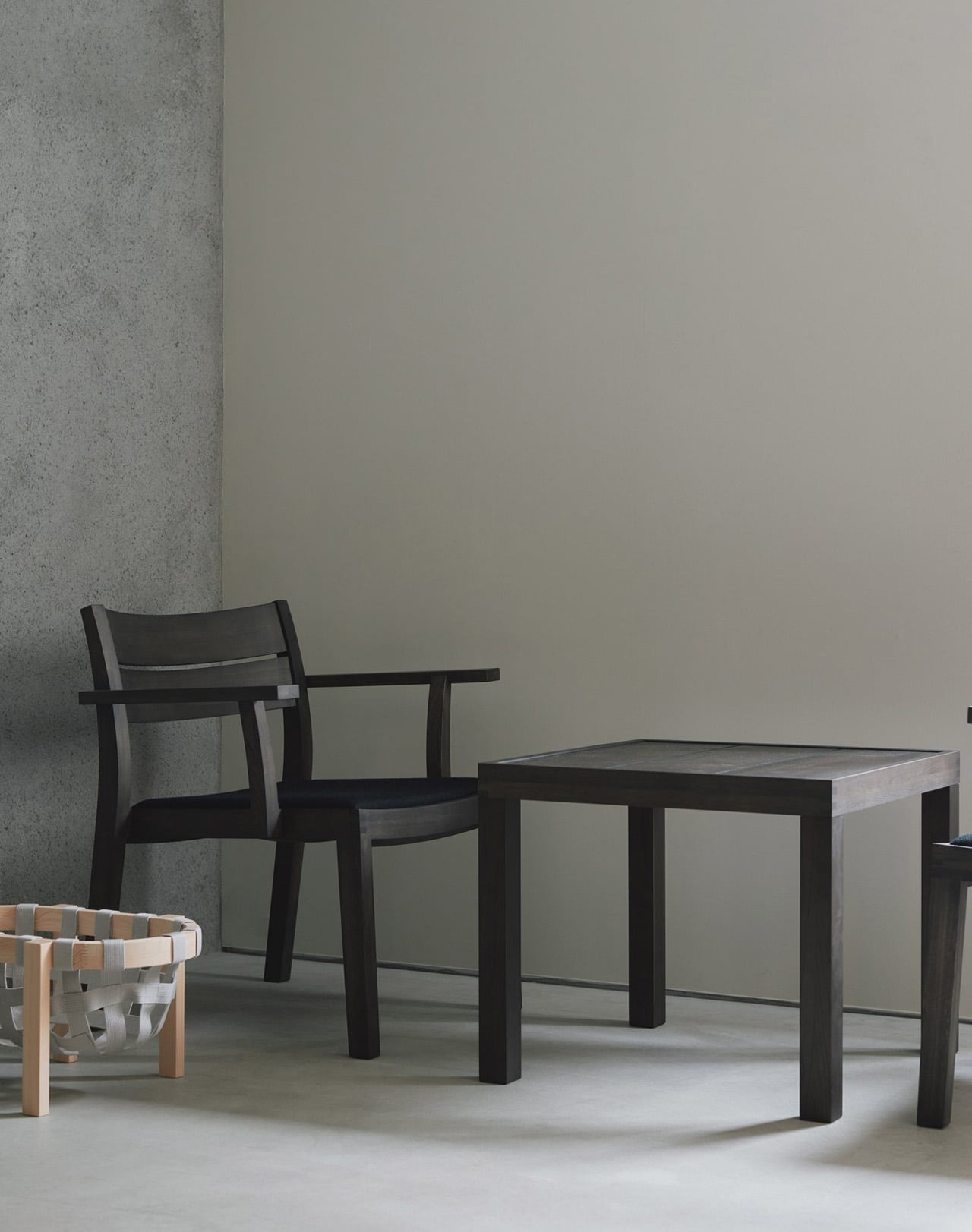
That's the whole trick. Each space is built around MAS pieces rather than placing them on a pedestal, so a chair is something you'd settle into for reading, and a low table is something you'd reach across for tea. The Japanese-grown wood keeps its knots, grain and colour shifts instead of being sanded into flawless uniformity. Around it sit lighting from New Light Pottery, handmade washi from Nao Tesuki Washi, a fragrance with Japanese forest notes developed with Sheep, and tea brewed from forest plants. You can buy a WK stool, a Sekisaka spoon or the fragrance on your way out, but as Yanko Design puts it, this isn't really a shopping proposition. It's an argument about sequence: furniture reveals itself differently when it sits inside the rhythm of a stay.
Enjoying this? Get new articles by email.
Images courtesy Yanko Design
Which is exactly why hotels and inns keep bringing design furniture into their rooms. Hospitality sells a feeling, and a feeling gets assembled from small physical things: how a chair takes your weight, where a lamp lands on the wall at nine in the evening, what the corridor smells like. Furniture is the one thing a guest touches continuously for hours, so it stops being decoration and becomes the delivery mechanism of the promise. For the furniture maker, it works the other way too. A guest room is the best showroom there is, because a night's stay is a demo no store floor can match. Kumano chose an oyado over a hotel deliberately, for a cultural intimacy and slowness that international hotel formats rarely hold.
There's a cultural layer here worth noticing, too. Roughly speaking, the Nordic and European tradition treats good design as part of ordinary domestic life: the well-made chair in the kitchen, the lamp everybody owns. The Japanese version leans on ritual and hospitality, where design lives inside the act of receiving someone, through the tea, the low table, the curtain at the door, the seasonal detail. Neither is better. They just start from different places, and it's telling that Kumano says most of these makers also showed alongside MAS at Copenhagen's 3 Days of Design this year, where the two worlds meet.
Images courtesy Yanko Design
For brands, the takeaway is less about wood and more about volume. Oyado MAS never argues that its furniture is good. There's no banner, no sale copy, no announcement. The only call to action is a piece of fabric you push aside with your hand. Advertising interrupts; this invites, and then lets the product be discovered inside a context where it makes sense. That's the move worth borrowing: instead of describing what your product does, ask which room it belongs in, and build that room. Merge into the life your customer is already living, and you don't have to shout to be noticed. You only have to be the thing that feels right once they've walked in.