La Marzocco Just Let a Beach Towel Brand Redesign Its Espresso Machine
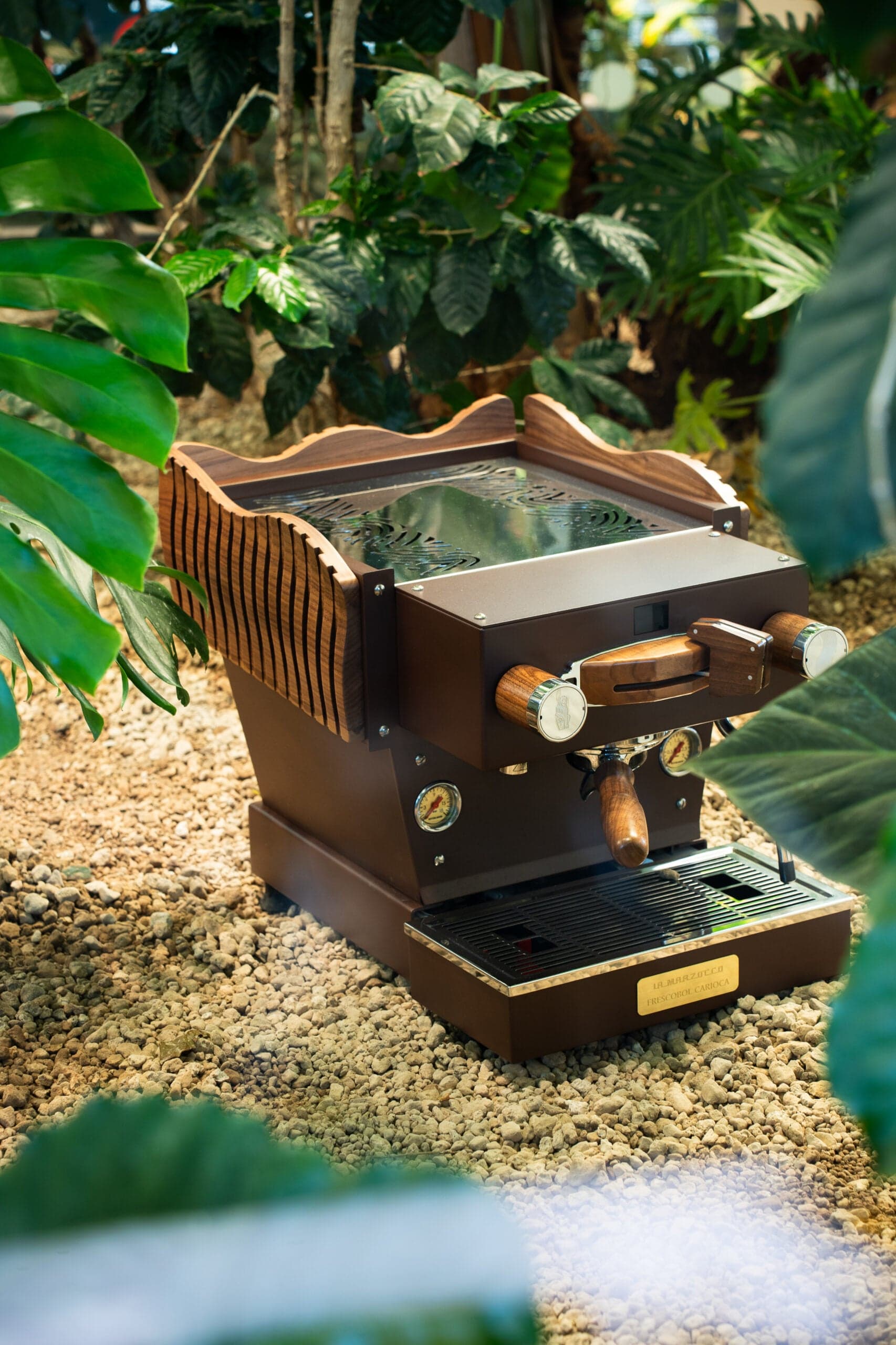
Espresso machines are not typically designed to look relaxed. La Marzocco has spent since 1927 building precision equipment in Florence that radiates a very specific energy: stainless steel, serious engineering, the quiet menace of a machine that knows more about extraction ratios than you ever will. So it's a genuinely funny image to sit with — La Marzocco's flagship Linea Mini, rebuilt in collaboration with Rio de Janeiro's Frescobol Carioca, wearing warm wood paneling lifted straight from the brand's handmade beach paddles, looking less like professional café equipment and more like it's about to ask you what your Pantone-coded cabana situation looks like.
The collaboration, called "Cafezinho Carioca," extends well past the one-of-a-kind machine — a full lifestyle capsule of linen robes, pajamas, swim trunks, t-shirts, mugs, and home accessories, all steeped in Frescobol Carioca's signature beach-resort ease. But the machine itself, hand-built by Italian workshop Officine Fratelli Bambi, is the collection's clearest thesis statement: warm timber grafted directly onto brushed metal, softening a machine built entirely around precision into something that looks like it might genuinely enjoy a slow Sunday.
What makes this pairing smarter than the average logo-swap collab is the shared idea underneath it, which the two brands lead with directly: cafezinho, Portuguese for "little coffee," is less a drink in Brazil than a social ritual — an excuse to sit, talk, and share a moment with someone. That's not actually so different from the Italian habit of standing at a bar counter for a two-minute espresso that somehow also functions as the day's social checkpoint. La Marzocco makes the machinery for one ritual; Frescobol Carioca makes the mood for the other. Neither brand had to invent common ground here — they just noticed they'd already been standing on the same one, roughly 5,700 miles apart.
Enjoying this? Get new articles by email.
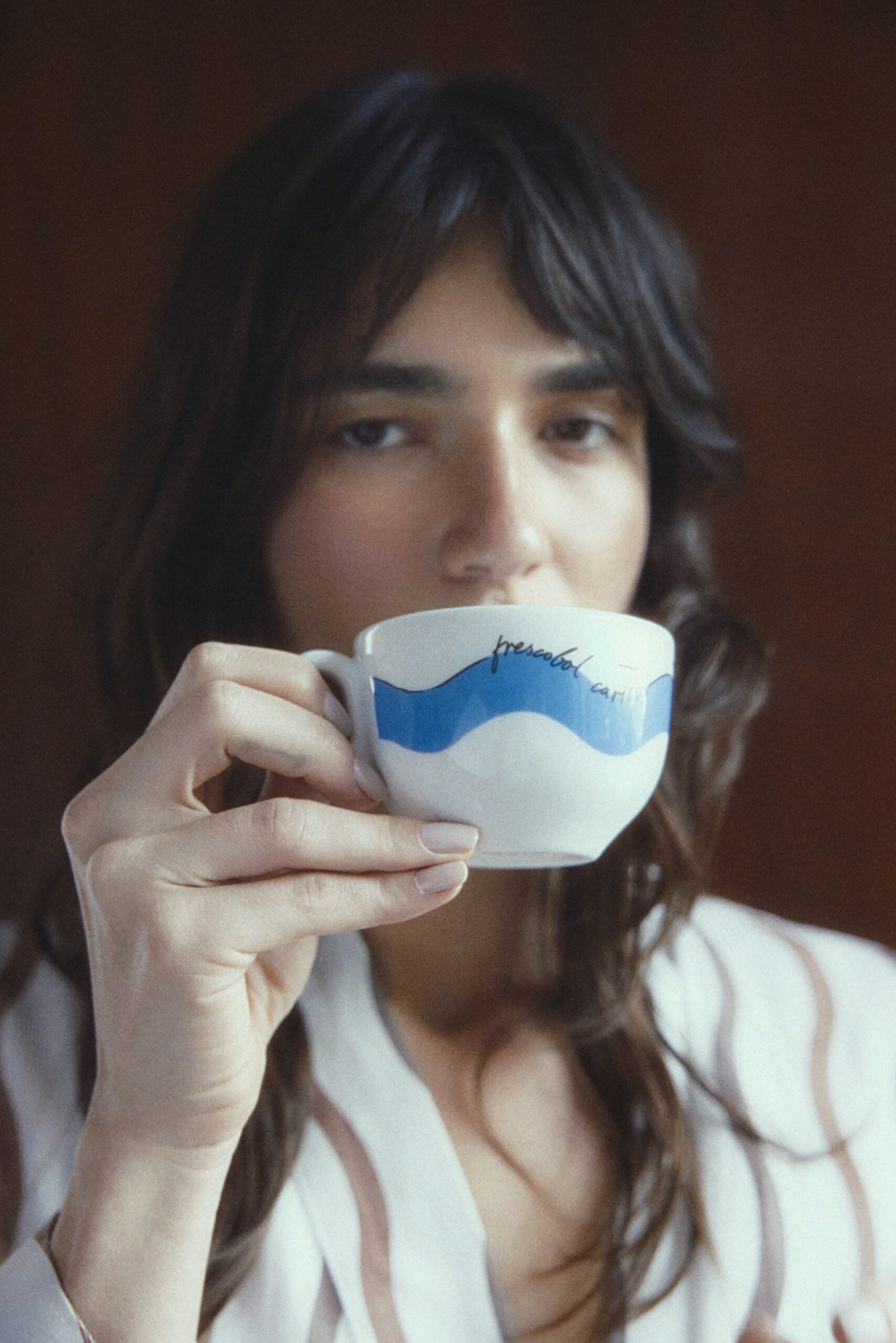
Photo: La Marzocco × Frescobol Carioca
That's the real lesson worth sitting with, more than the wood paneling: a great collaboration doesn't need the two brands to share a category. It needs them to share an emotional register that neither one can fully build alone. La Marzocco has precision and heritage down cold, but "precision" rarely reads as "relaxing." Frescobol Carioca has effortless, sun-warmed ease down cold, but a beach paddle brand doesn't have much of a claim to genuine craftsmanship at the level of a hand-built espresso machine. Put together, the machine gets to borrow warmth it couldn't manufacture internally, and the beach brand gets to borrow a level of engineering credibility no amount of nice linen ever provides on its own. Each brand is quietly doing for the other the exact thing it can't do for itself.
There's a genuinely useful signal here for any brand eyeing a cross-industry partnership, well outside coffee or resortwear specifically: the strongest collaborations aren't between similar brands reinforcing the same message twice. They're between brands whose emotional territories don't naturally overlap on paper, but which turn out to be reaching for the same underlying feeling from two completely different directions — precision from one side, poetry from the other, meeting in the middle at something neither could have designed alone. Travel and hospitality brands, lifestyle labels, even hardware companies sitting on a genuinely well-crafted but emotionally flat product all have a version of this same opportunity waiting: find the brand solving for the feeling you're missing, not the closest competitor solving the same problem you already have covered.
The whole thing debuted this June at Pitti Uomo in Florence, pouring cafezinho-based drinks for an audience that mostly showed up for menswear and left having learned that the fastest route to slowing down is, apparently, letting a beach towel brand near your espresso machine.