Photo: Light
The Flip Phone Didn't Come Back. We Just Finally Deserved It Again.
Somewhere, a Motorola RAZR is watching all this unfold with quiet, folded-shut satisfaction.
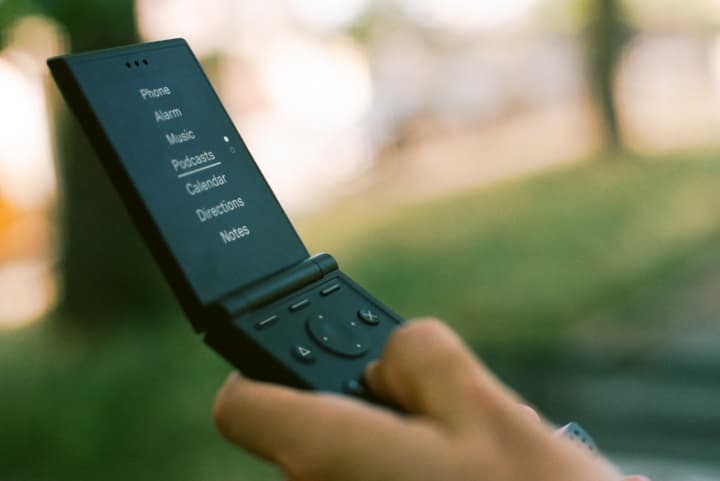
Light — the Brooklyn company that built its whole identity on making phones do less — just released the Light Flip, a clamshell handset with 5G, a matte OLED screen, a 50-megapixel camera sensor, and precisely zero social media apps. It ships in six colors, costs $299, and represents something genuinely funny if you sit with it long enough: an entire generation raised entirely on smartphones is now paying real money to recreate the exact phone their parents complained about upgrading from.
This is not an accident, and it is not really about the hinge. Flip phones are enjoying a full cultural moment right now, the kind that shows up as a hashtag with tens of millions of views and think pieces trying to explain why. The obvious read is nostalgia — Y2K aesthetics, Avril Lavigne needle drops, the general 2000s revival that's already dragged low-rise jeans back into stores against most people's better judgment. And sure, that's part of it. There's a specific, almost physical satisfaction to snapping a phone shut that a glass slab will never replicate, no matter how many haptic engineers you throw at it.
Enjoying this? Get new articles by email.
But the more interesting part is who's buying these things and why. It's largely Gen Z — a generation that never actually lived through the flip phone era the first time around, which means what they're feeling isn't quite nostalgia in the traditional sense. It's something closer to homesickness for a place you've only heard described. Researchers have a word for missing a past that isn't technically yours, and it fits uncomfortably well here: an entire cohort aching for the "simpler" 2000s, despite having spent their actual childhoods holding iPads.
What makes the Light Flip a smarter play than pure retro cosplay is that it isn't just chasing the aesthetic — it's chasing the actual complaint. Plenty of companies have tried selling flip-phone nostalgia as a look; Light is selling it as a boundary. Closing the phone isn't decorative here — there's no external screen at all, which means no notification previews, no glanceable badge counts, none of the ambient pull that makes even a locked smartphone feel like it's still watching you. You have to physically open the thing to let it back into your life. That's the whole feature.
It's also worth saying plainly: this isn't a company discovering minimalism as a marketing angle. Light built its reputation on stripped-down phones since 2017, well before "digital detox" became a personality trait. The Flip is just the first time that philosophy has been dressed in a shape people already have deep, sentimental muscle memory for — the satisfying click of a hinge, the specific violence of ending a call by physically snapping the phone shut instead of tapping a red circle like a coward.
Whether this sticks past the current wave of dumbphone TikToks remains genuinely unclear — plenty of "digital wellness" purchases end up in a drawer within a month, alongside the film camera and the physical planner. But the underlying instinct feels less like a trend and more like a correction. A device engineered for infinite attention finally has a rival built for the opposite: something you can close, put down, and actually be finished with — even if, this time around, it also happens to take a decent photo.