The Only Gadget Concept Right Now With Exactly One Feature, and It's Perfect
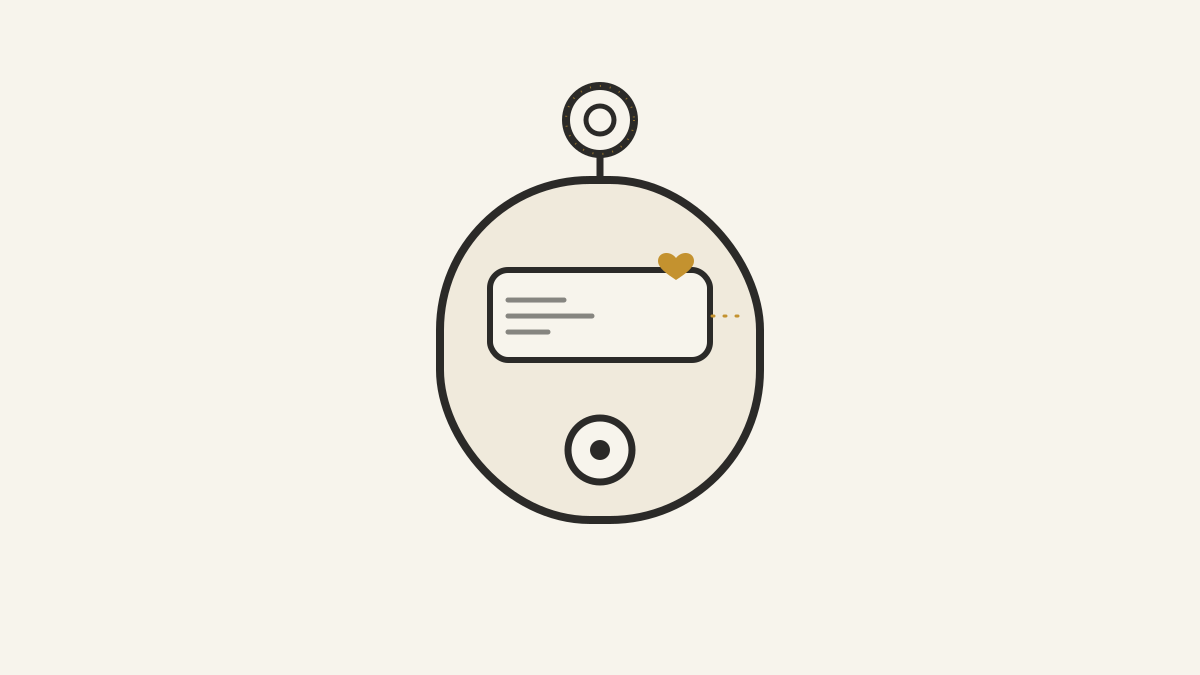
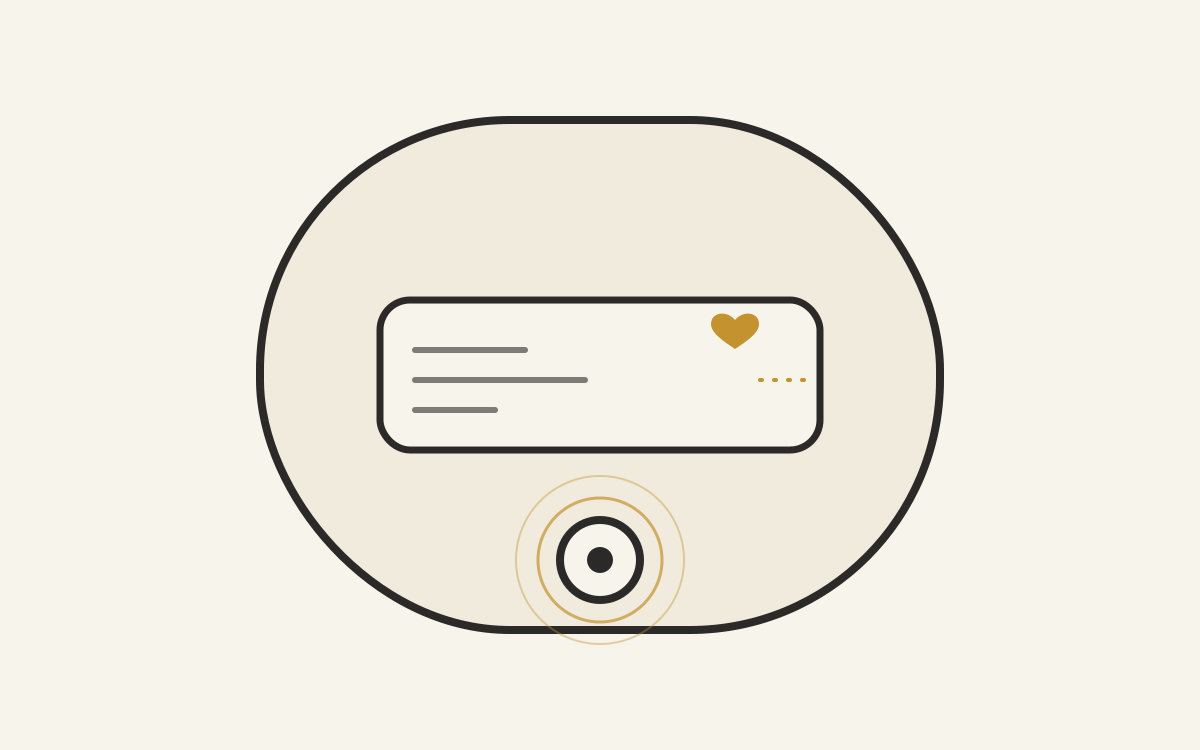
Somewhere in the endless scroll of gadget concepts promising to do more — track more, notify more, sync with more of your other devices — a small oval keyring named TOBI showed up promising to do exactly one thing. Press the button. Wait a beat. Read a single line of fortune, scrolling across a tiny screen like a fortune cookie slip unspooling in real time. That's the entire feature list. And that restraint is precisely why it's worth paying attention to.
Designed by Seoul-based industrial designer YuJung Jung, TOBI is still just a concept — no release date, no price, no crowdfunding page — but the thinking behind it is already fully formed. It's built to clip onto a keyring or slip into a pocket, small enough to disappear until you actually want it, at which point holding the button gets you a brief, personality-driven greeting followed by whatever one-line nudge it has for you that moment. There's no history to scroll back through, no streak to maintain, no unread badge quietly guilting you from a home screen. You get your line, and then it's just a keyring again.
Enjoying this? Get new articles by email.
What makes this genuinely clever, rather than just minimal for minimalism's sake, is what happens to a function once you strip away literally everything competing for attention around it. A horoscope buried inside a phone app is one of forty things demanding a glance, wedged between a notification and whatever you were actually trying to do when you picked the phone up. TOBI has nothing to compete against. When you press that button, there is nothing else the object can offer you — so the one thing it does offer arrives without the noise. The design isn't decorating the function. It's clearing every obstacle out of the function's way, which is a much harder and much rarer discipline than adding features people can just as easily ignore.
That's also what pushes TOBI past "novelty collectible" into something closer to a small, physical form of emotional support. A lucky charm has always worked less because of any actual power in the object and more because of the ritual of reaching for it — the small, private act of checking in with something that feels like it's on your side. TOBI mechanizes that same ritual without cheapening it: the keyring becomes a genuine stand-in for a tiny, low-stakes moment of reassurance, available on demand, with none of the second-guessing that comes from asking a search engine or an app how you're supposed to be feeling today.
There's a broader signal worth reading into this for anyone designing hardware right now. A huge amount of current product thinking assumes emotional engagement has to come from intelligence — a chatbot that remembers you, an AI companion that adapts its responses, a wearable that learns your patterns and reacts accordingly. TOBI quietly argues the opposite: sometimes a small, well-timed surprise, delivered with zero personalization and zero memory of you, does more emotional work than a system trying hard to seem like it understands you. That's a genuinely useful provocation for designers currently racing to bolt AI onto every physical object — the honest question worth asking first isn't "what could this device learn about me," but "does this even need to be smart to make someone feel something." Plenty of the most memorable objects people carry — a lucky coin, a worn photograph, a keychain from a trip — never once tried to be clever. They just showed up, reliably, exactly when reached for.
TOBI may never leave the render stage. But the idea behind it doesn't need to ship to be worth sitting with: in a market flooded with devices competing to know you better, the most disarming move left on the table might just be a small object that doesn't try to know you at all — it just shows up, says one true-feeling thing, and gets out of the way.