Design: Charlie Firth
These Lamps Turn a 3D Printer's Usual Flaws Into the Whole Design
Most people using a 3D printer spend real effort trying to make the final object look like it wasn't 3D printed at all — sanding away layer lines, hiding the internal infill pattern, chasing the smooth, mass-manufactured finish machines are supposed to imitate. Wales-based designer Charlie Firth looked at that entire instinct and did the opposite: he built a whole lamp series around letting the printer's fingerprints show.
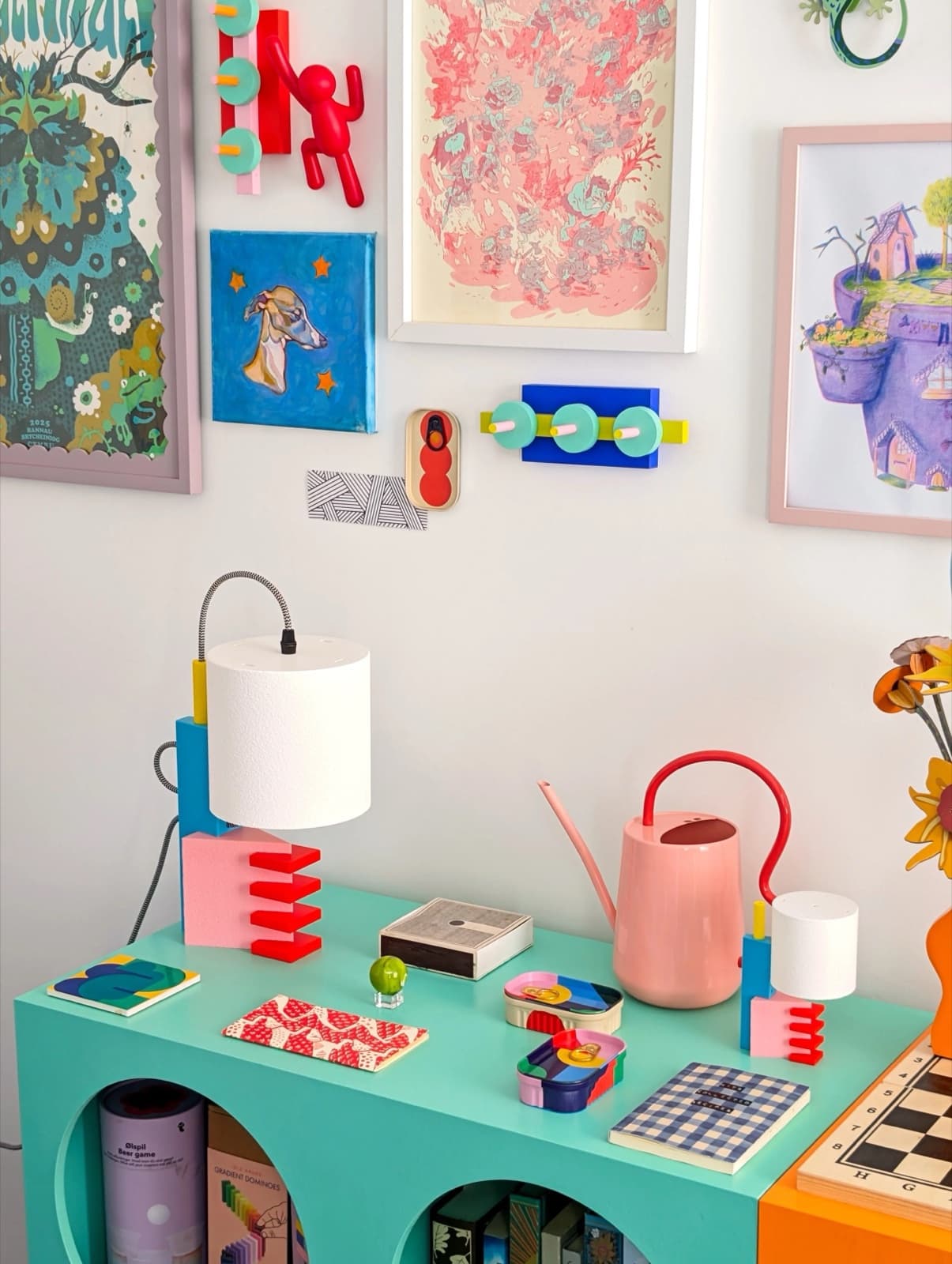
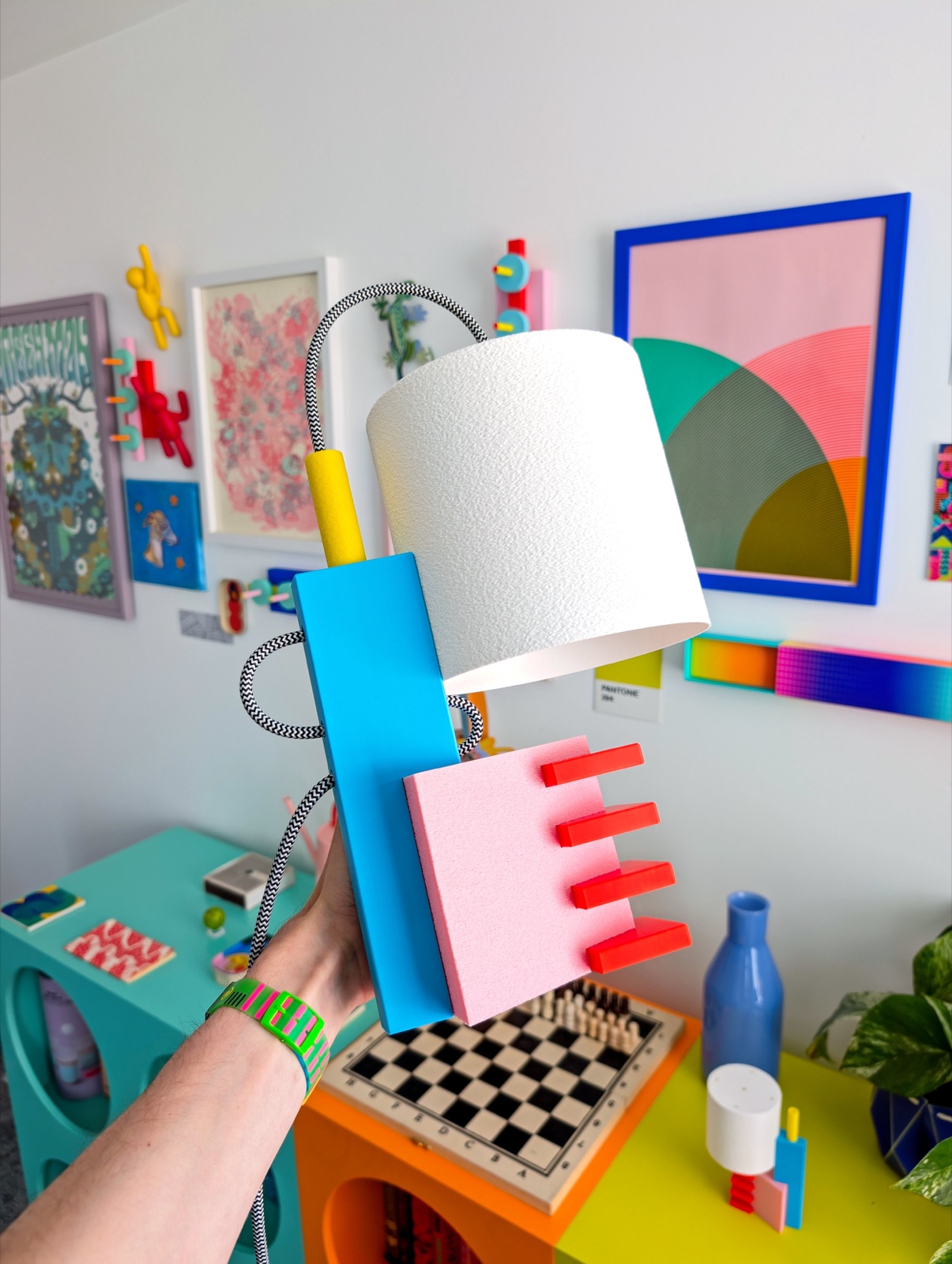
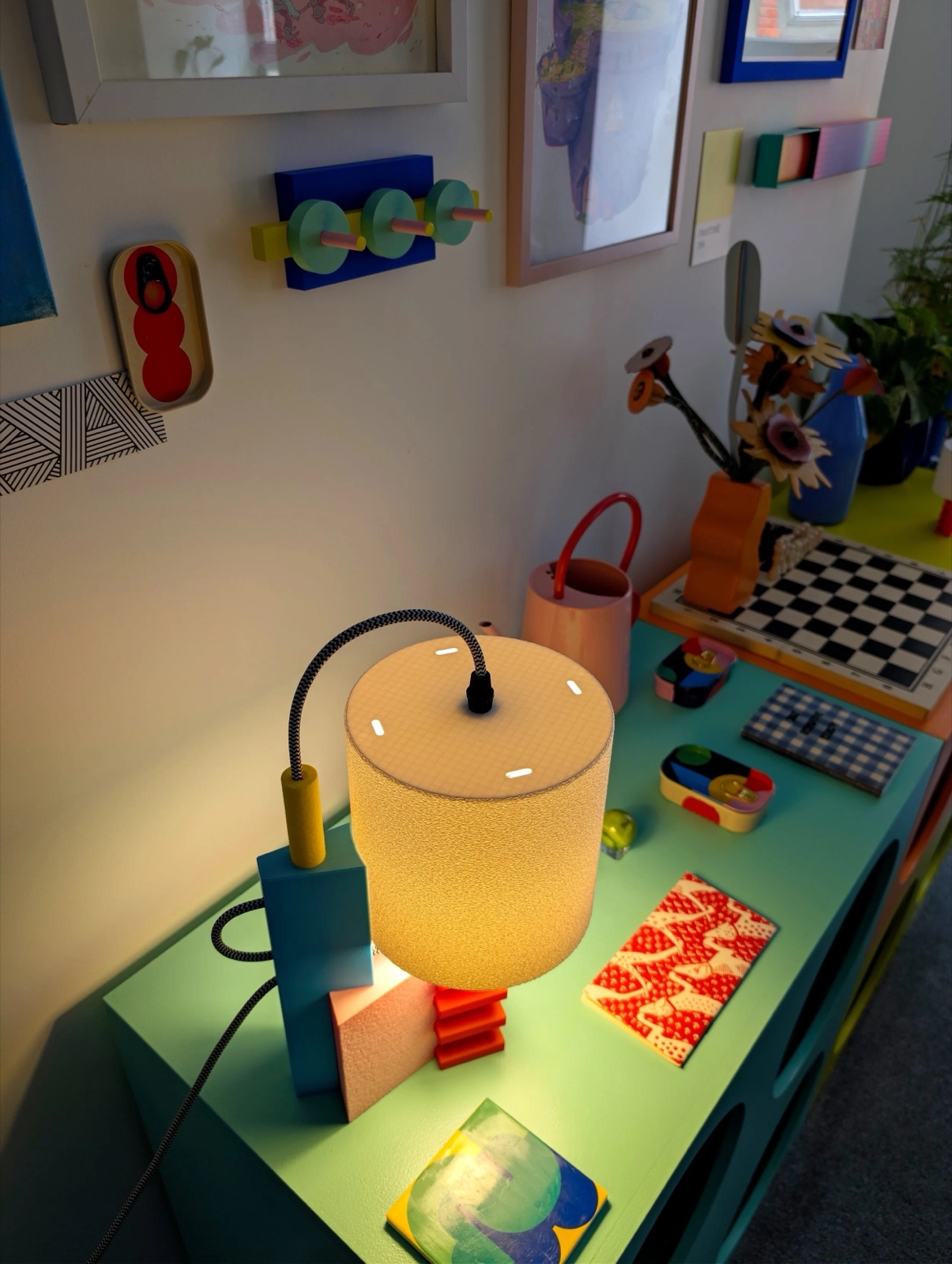
Firth's ongoing collection of sculptural table lamps borrows its visual language directly from the Memphis Group — the 1980s design movement famous for loud geometry, clashing shapes, and colors that refuse to apologize for themselves. His process starts analog: sketchbooks full of collected block shapes and graphic motifs, layered and collaged by hand before anything touches a computer. Those flat compositions then become modular 3D models, with individual components, arrangements, and colors kept interchangeable and testable digitally before a single layer gets printed. The genuinely clever move comes after that: rather than treating the printing process as a neutral manufacturing step, Firth lets its physical quirks — visible layer lines, the internal cross-hatched infill pattern, small texture variations between parts — become actual design features. His "Memphis Is Back" lamp takes this furthest, letting that internal infill pattern glow visibly through the shade once the light switches on, a look he apparently noticed as a printing accident before deliberately building it into later pieces.
Enjoying this? Get new articles by email.
Design: Charlie Firth
That decision is the real subject worth sitting with, more than any single lamp. For most of 3D printing's public life, its central selling point has been efficiency and customization — cheaper prototyping, on-demand manufacturing, personalization at scale. What gets talked about far less is what happens once designers stop treating the technology as an invisible production method and start treating it as a genuine material with its own visual signature, the way a designer might treat the grain of a specific wood or the texture of hand-thrown ceramic. A 3D printer doesn't have to disappear into the final object. It can be the object's whole aesthetic identity, the same way exposed brick or visible stitching became design languages in their own right once someone stopped trying to hide them.
Design: Charlie Firth
That shift matters for more than lighting design specifically. It points toward a genuinely different relationship between everyday objects and the technology quietly making them. A huge amount of what fills ordinary homes — kitchenware, storage, small furniture, lighting — still gets manufactured to look as anonymously smooth and mass-produced as possible, because that's historically what "properly made" was assumed to look like. Firth's work is a small, colorful argument that manufacturing method itself can be a legitimate aesthetic choice, not something to be erased in the name of looking finished. Once that idea takes hold, ordinary household objects gain a much wider design vocabulary to draw from than "smooth, neutral, forgettable."
There's a genuine opening in here for brands too, beyond the individual designer showcase. A technology this visually expressive and this easy to customize digitally — swap a shape, swap a color, regenerate a variant in an afternoon rather than retooling a production line — is a natural fit for consumer-facing design activations, not just studio output. A brand willing to hand customers a constrained but genuinely creative set of choices — pick your color combination, your pattern density, your silhouette — and then actually 3D print the result gets something a fixed product line never can: a customer who feels like a collaborator in the object's final form, not just a buyer of it. That kind of participatory design experience tends to build a far stickier relationship with a brand than another seasonal color drop ever manages, because the person walks away with something that is, in some small but real way, theirs.
None of this requires every future lamp to look like a Memphis fever dream. It just requires taking seriously the idea that a manufacturing process has its own visual voice worth listening to, rather than sanding it down until it sounds like everything else on the shelf.