Photo: Shigeru Ban Architects
This Hotel Was Designed Around a Japanese Idea for Catching Illness Before It Starts
Most luxury hotels sell an escape. THE PASONA, the new retreat on Japan's Awaji Island designed by Pritzker Prize-winning architect Shigeru Ban, is quietly selling something more useful: a system for noticing your own body before it has to shout at you.
The whole property is organized around 未病 (mibyō) — a traditional Japanese medical concept describing the state before illness, when nothing is technically wrong yet, but fatigue, poor sleep, and low-grade imbalance have already started accumulating. Rather than waiting for a diagnosis to justify intervention, mibyō treats those early, easy-to-dismiss signals as the actual moment worth acting on — through diet, movement, and rest, before anything requires a doctor's visit. It's a fundamentally different starting point than most wellness branding, which tends to sell relaxation as a reward after burnout rather than a way to catch it earlier.
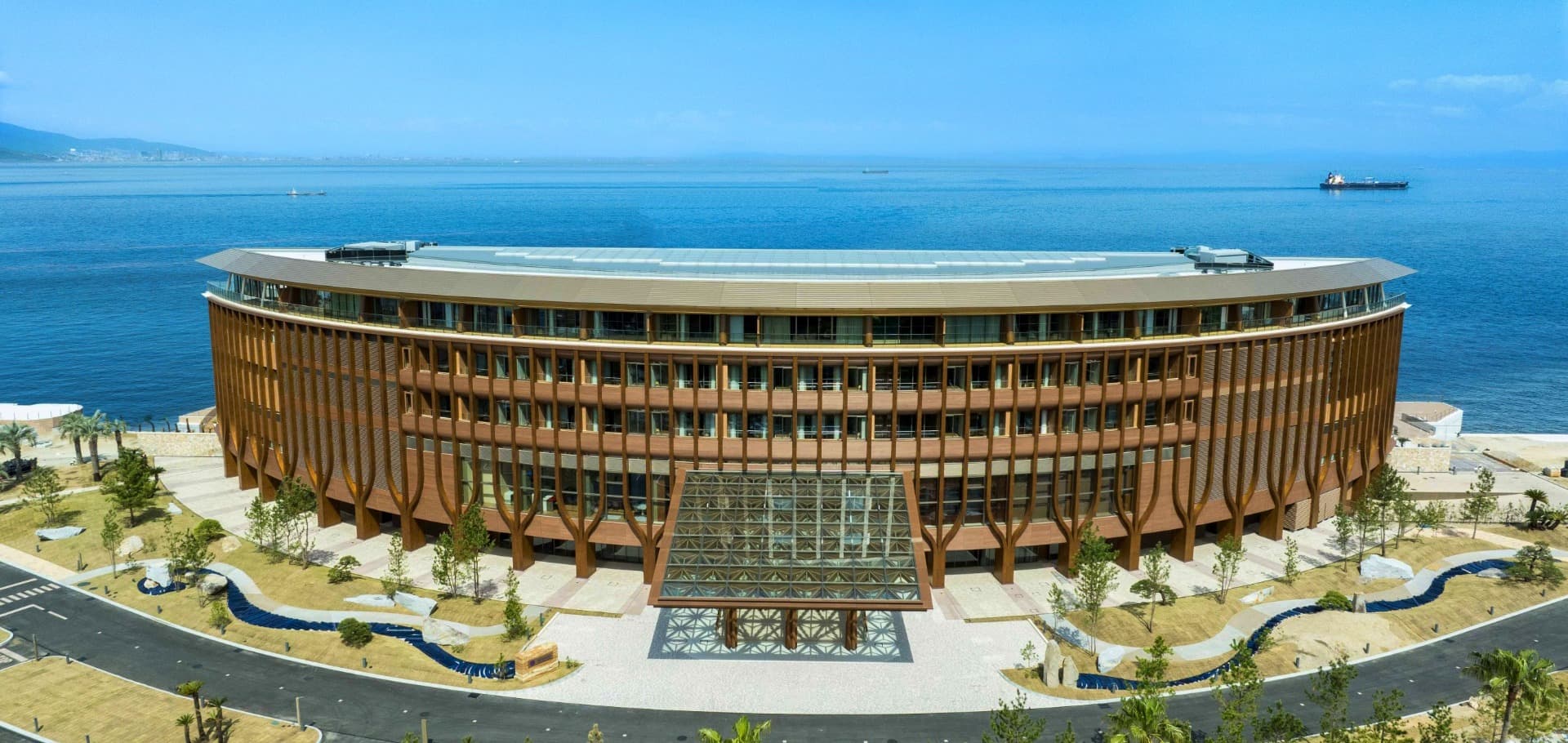
Ban translated that philosophy directly into the architecture, rather than treating it as a spa-menu afterthought. The building sits on a site with genuinely split conditions — the ocean on one side, forested hills on the other — and instead of picking a single orientation, he split the building itself: a D-shaped plan with a transparent, sea-facing glass facade rising above a tidal breakwater on one side, and a row of dignified timber columns facing the hillside on the other, joined by a central atrium that keeps both views legible from within. It's a rare case of a building's plan literally mirroring its underlying philosophy — attending fully to two different conditions at once, rather than collapsing them into one compromise.
Enjoying this? Get new articles by email.

Photo: THE PASONA
That same attentiveness shows up in the timber canopy over the entrance stairway, framed using the traditional Japanese asanoha (hemp leaf) geometric pattern — a motif long associated with vitality and health in Japanese design, deployed here as a genuinely functional signal rather than decoration for its own sake, appearing throughout the interior as a quiet, recurring reminder of what the whole building is actually for.
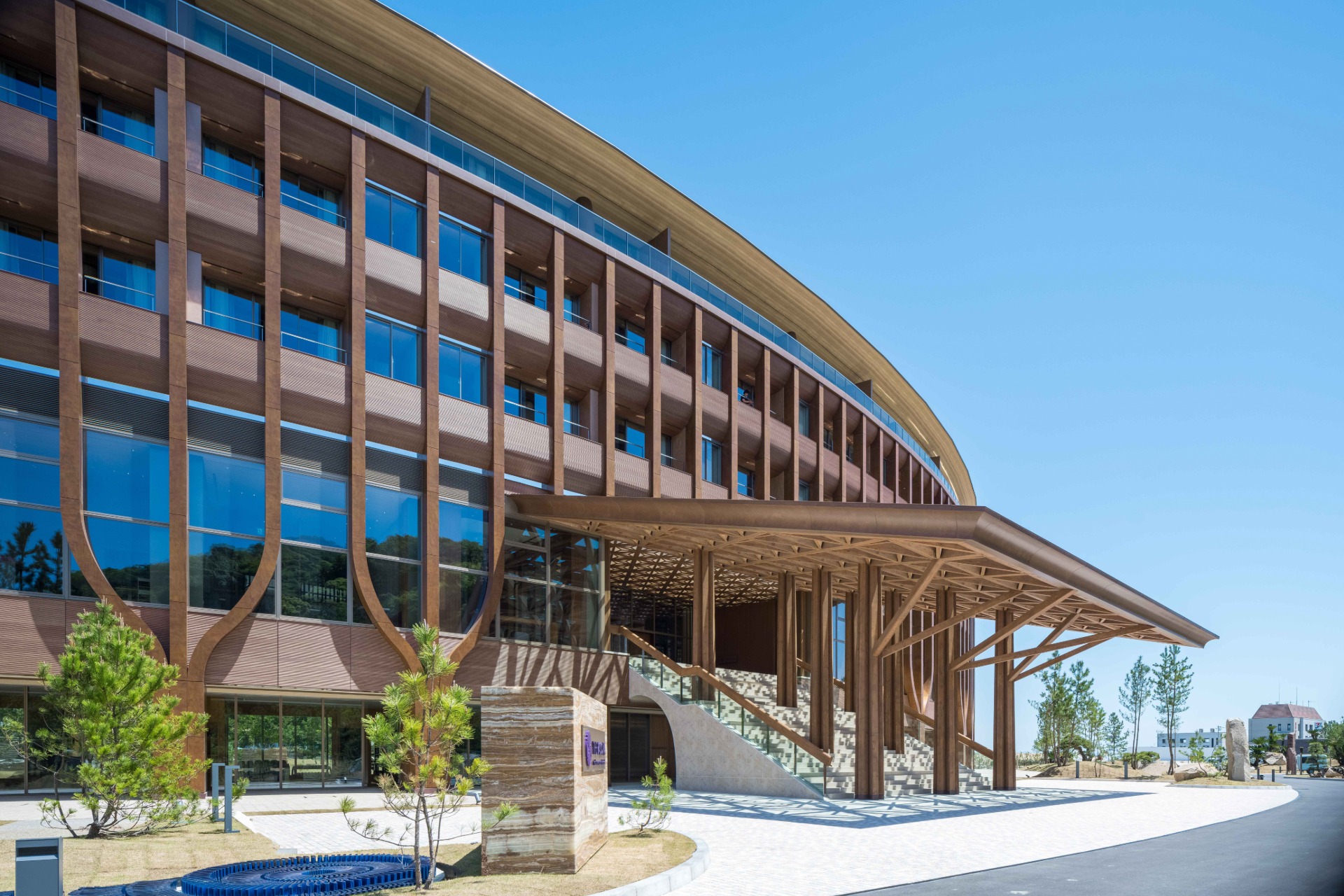
Photo: Shigeru Ban Architects
Where this moves from beautiful architecture into something closer to a genuinely well-designed system is in how deliberately the guest experience is structured. Every room includes a natural hot spring bath fed from beneath the property — not a spa add-on, a baseline. Select "Wellness Program" rooms include a sensor-equipped bed, developed from technology first shown at Expo 2025's "sleep of the future" exhibit, that tracks a sleeper's movement through the night and automatically adjusts posture support in response, rather than asking the guest to somehow self-diagnose their own sleep quality. On-site "mibyō guides" work alongside Kobe University's medical school to build personalized daily recommendations — food, movement, rest — based on a guest's actual patterns, not a generic wellness checklist handed to everyone at check-in.
What's genuinely instructive here, for designers working in any category, is the discipline of building an experience around addressing a problem before it's obvious, rather than around fixing something after it's already broken. Most hospitality design treats guest wellbeing as an amenity — a nice pool, a decent gym, a spa menu with expensive-sounding treatments. THE PASONA treats it as the actual design brief: every material choice, every room feature, every interaction with staff is oriented toward helping someone notice their own early warning signs, then act on them, in an environment specifically built to make that noticing effortless rather than effortful.
There's a broader lesson in that distinction worth carrying well beyond hospitality design. The instinct to wait until something is visibly broken before designing a solution for it is, if anything, the far more common default — in products, in workplaces, in most systems people build. Mibyō offers a genuinely different discipline: design for the quiet, early signal, not just the loud, obvious failure. A building that takes that seriously enough to shape its literal floor plan around it isn't just an impressive piece of architecture. It's a working argument for designing preventively, in a world that mostly still designs reactively.