Photo: Of My Imagination
This Public Bench Turns Into a Table, and That's Where the Etiquette Breaks Down
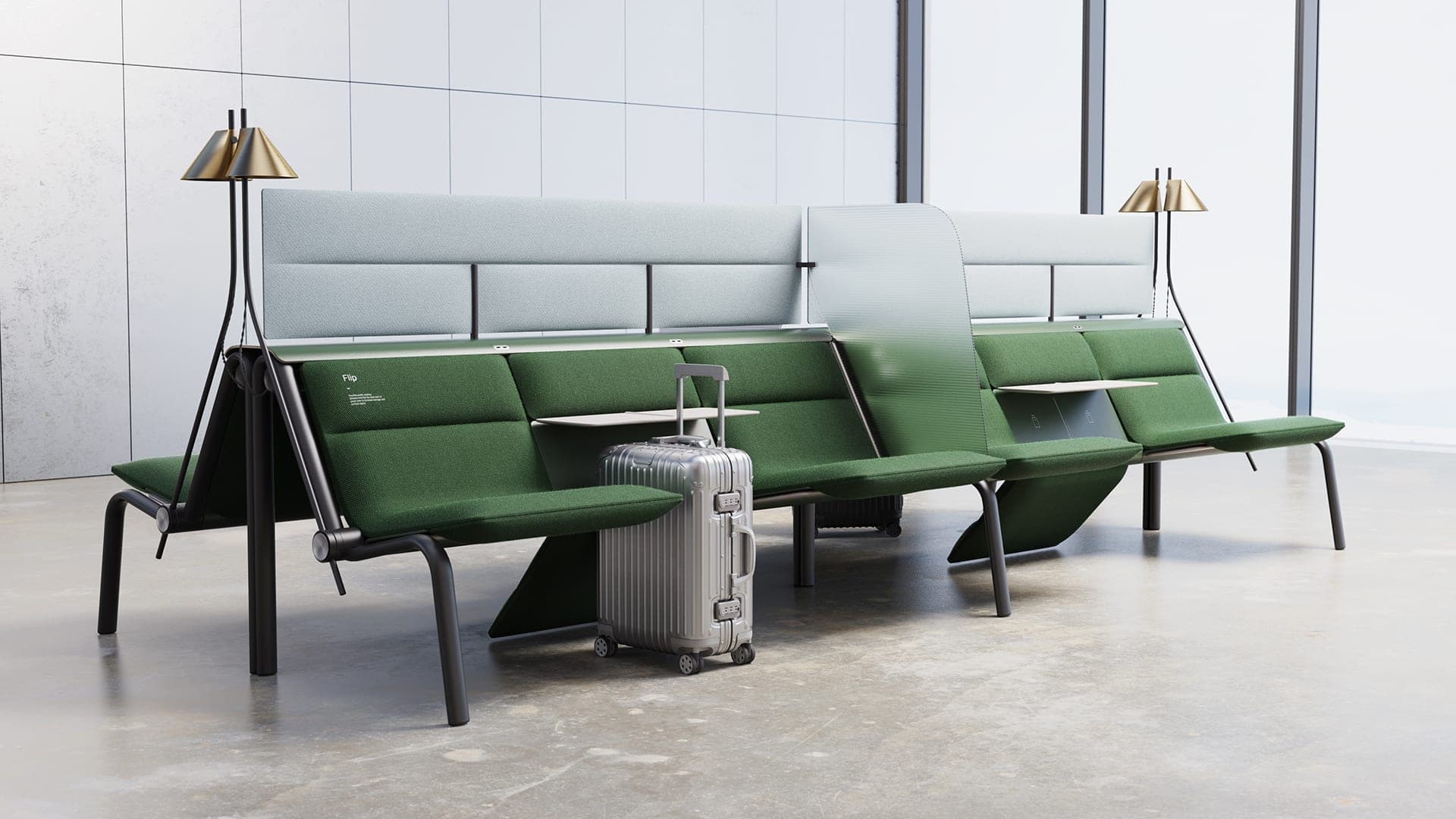
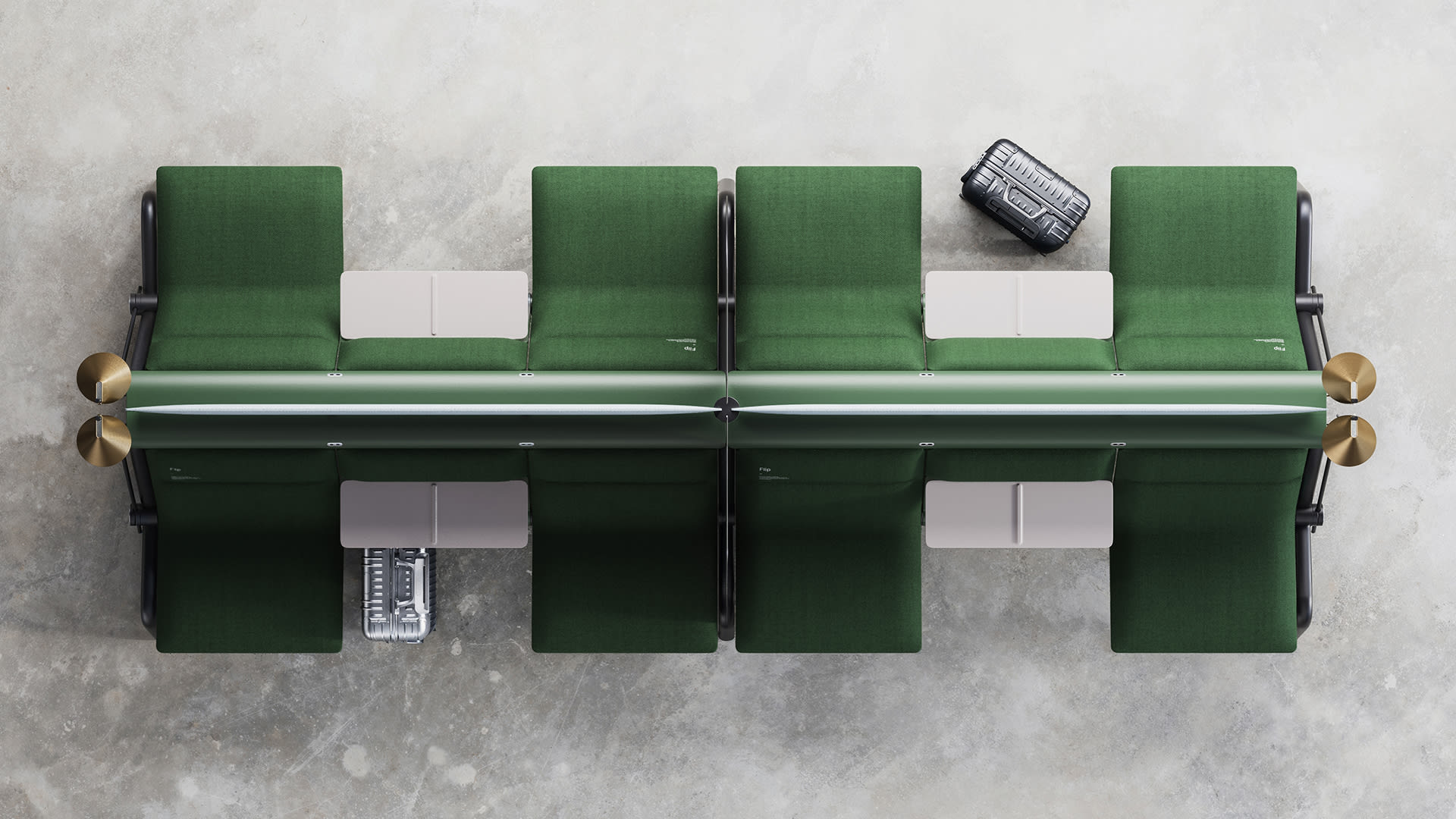
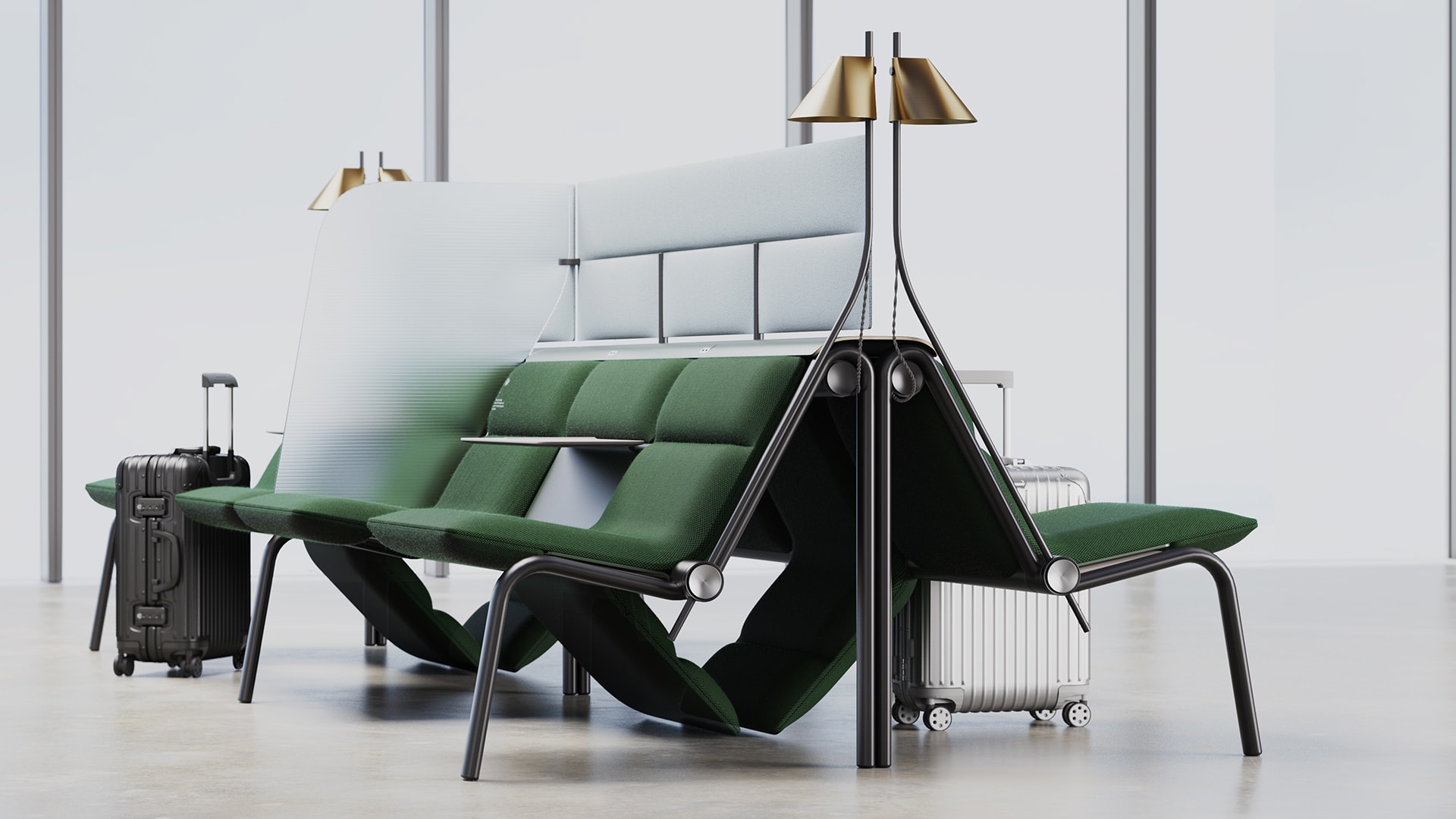
Public waiting-area seating has one job, and it does that job badly roughly half the time: it's either uncomfortably full, or comically empty, rarely the happy medium in between. London-based industrial design studio Of My Imagination looked at that mismatch and designed Flip — a modular seating concept where individual seats rotate along a shared mechanism, letting each one fold up and out of the way, revealing a fold-down table built into its underside. Empty rows quietly become functional workspace. Busy rows stay seating. Same footprint, two different jobs, depending entirely on what a space actually needs in that moment.
The origin story is a genuinely sharp piece of design thinking. OMI's designers were reportedly inspired by watching public seating during the pandemic get retrofitted with hand-made signage — stickers and cardboard cutouts crudely marking which seats were off-limits for distancing. Flip is essentially that same problem, solved properly instead of duct-taped: a seating system that can reconfigure itself smoothly, without a single handwritten sign, adjusting to whatever the moment requires while keeping the space looking intentional rather than makeshift. That's a genuinely elegant piece of "future-proofing" — not by predicting one specific crisis, but by designing flexibility into the object itself so it can absorb whatever unpredictable demand shows up next.
Enjoying this? Get new articles by email.
Design: Of My Imagination
Here's the part worth sitting with, though, because it's the one a render never quite shows: the exact moment this system gets deployed in a real airport or train station, it hands every stranger nearby an unspoken social puzzle. If a seat is flipped up into table mode, is it genuinely available to be flipped back down and sat on? Or has someone silently claimed that space as their personal laptop desk, and would flipping it back count as a small act of public rudeness? Physical objects that serve double duty in shared space have always required some unwritten social contract to function smoothly — nobody's ever printed instructions for "how long you're allowed to use a coffee shop table before ordering something else" either — but Flip introduces that ambiguity into a genuinely load-bearing piece of public infrastructure, where the stakes of guessing wrong are a tired traveler standing awkwardly next to someone's laptop, unsure whether they're allowed to ask. A design that's flexible enough to serve two purposes still needs some kind of visual or social cue for which purpose currently applies — otherwise the flexibility just relocates the friction from "not enough seats" to "who gets to decide what this seat is for right now."
Design: Of My Imagination
That tension doesn't undercut the underlying idea, though — if anything, it points at how much broader this concept's real potential actually is, well beyond airport benches specifically. The genuinely valuable insight in Flip isn't "seats that also become tables." It's the more general principle: a single object, engineered to serve two distinct, non-overlapping functions depending on real-time demand, is a far more space-efficient answer than building two separate, permanently fixed pieces of infrastructure for two needs that rarely peak at the same time. That logic scales cleanly to plenty of other crowded public environments — a railing that becomes a bike rack during off-peak hours, a planter that opens into extra seating during an event, a wall panel that flips from signage into a charging station. Anywhere space is genuinely scarce and demand fluctuates in predictable daily or seasonal waves, there's a version of this same idea worth exploring.
Flip is still just a concept, with no announced production plans — which, if anything, makes it a better prompt than product right now. The mechanical cleverness is already there. What's still unsolved is the softer, harder problem sitting right underneath it: how do you design an object flexible enough to change jobs on demand, without also quietly outsourcing the awkward job of deciding who gets to use it to a room full of strangers who've never met and have zero interest in negotiating?