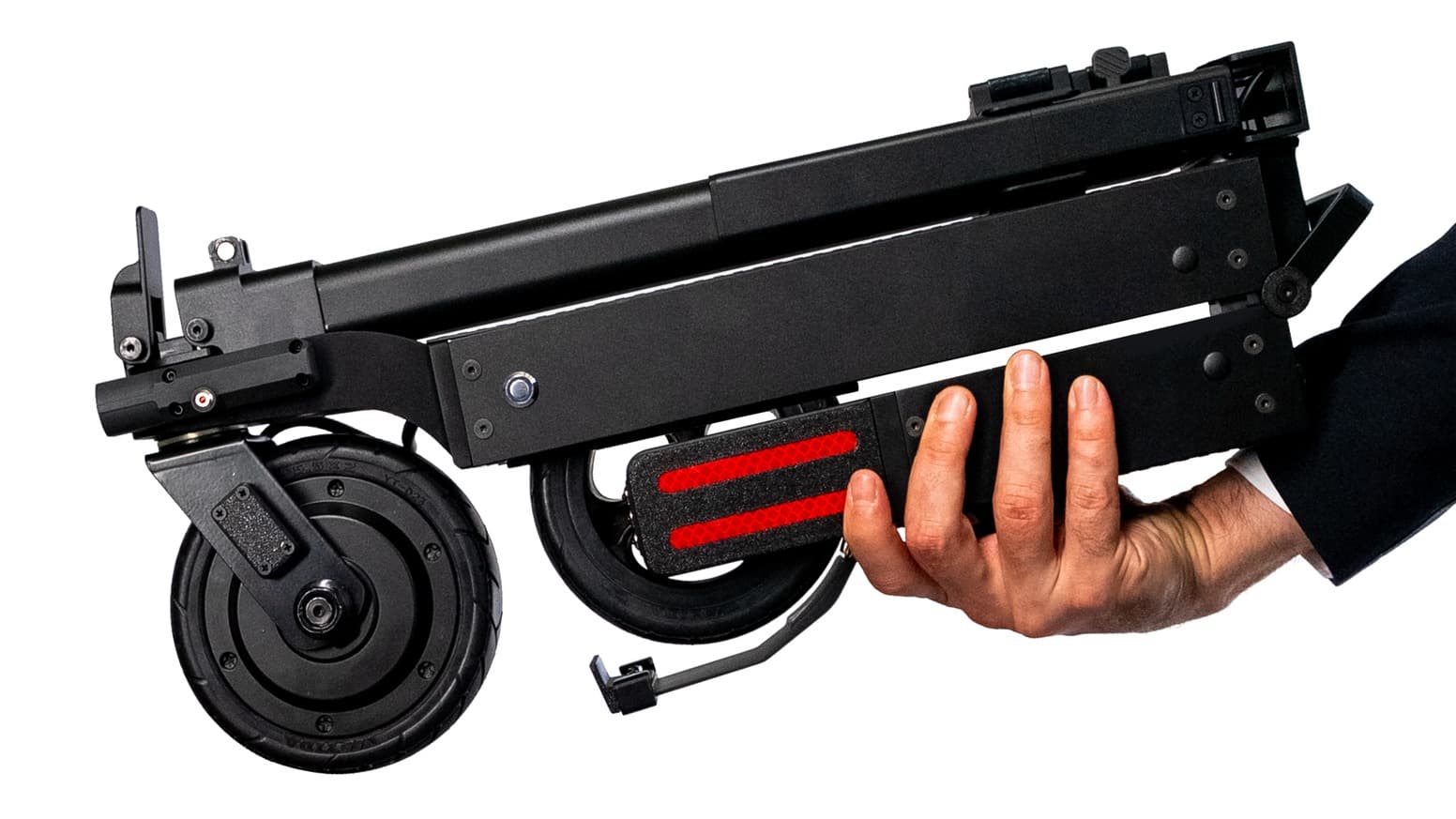
Photo: Blizwheel Inc. / Kickstarter
This Scooter Folds Down to the Size of a Laptop. That Changes More Than You'd Think.
Most e-scooters ask you to make a decision the moment you buy one: where, exactly, are you going to keep this thing? Under a desk, it's an obstacle. In a hallway, it's a hazard. In an apartment with no storage to spare, it's a reason not to buy one at all. The Blizwheel F0.5, currently raising funds on Kickstarter, answers that question by refusing to take up space in the first place — folding down to roughly half a meter, light enough at under 17 pounds to genuinely carry in one hand, built from the same aircraft-grade aluminum logic that makes carry-on luggage possible.
It's easy to file this under "clever gadget" and move on. It's worth pausing a beat longer, because the actual shift here isn't the scooter — it's what becomes possible once a vehicle stops needing a dedicated place to live.
The obvious audience is the daily commuter, and the obvious win is the classic "last mile" problem — the annoying, oddly-shaped gap between where public transit drops you off and where you actually need to be. A scooter that folds small enough to genuinely fit inside a backpack, rather than merely folding at all, changes that gap from something you tolerate into something you can just delete. No more locking a bike to a rack and hoping. No more figuring out where an unfolded scooter is supposed to stand at your office. It travels the way a laptop does — in your bag, forgotten until needed, unfolded in seconds when it is.
Enjoying this? Get new articles by email.
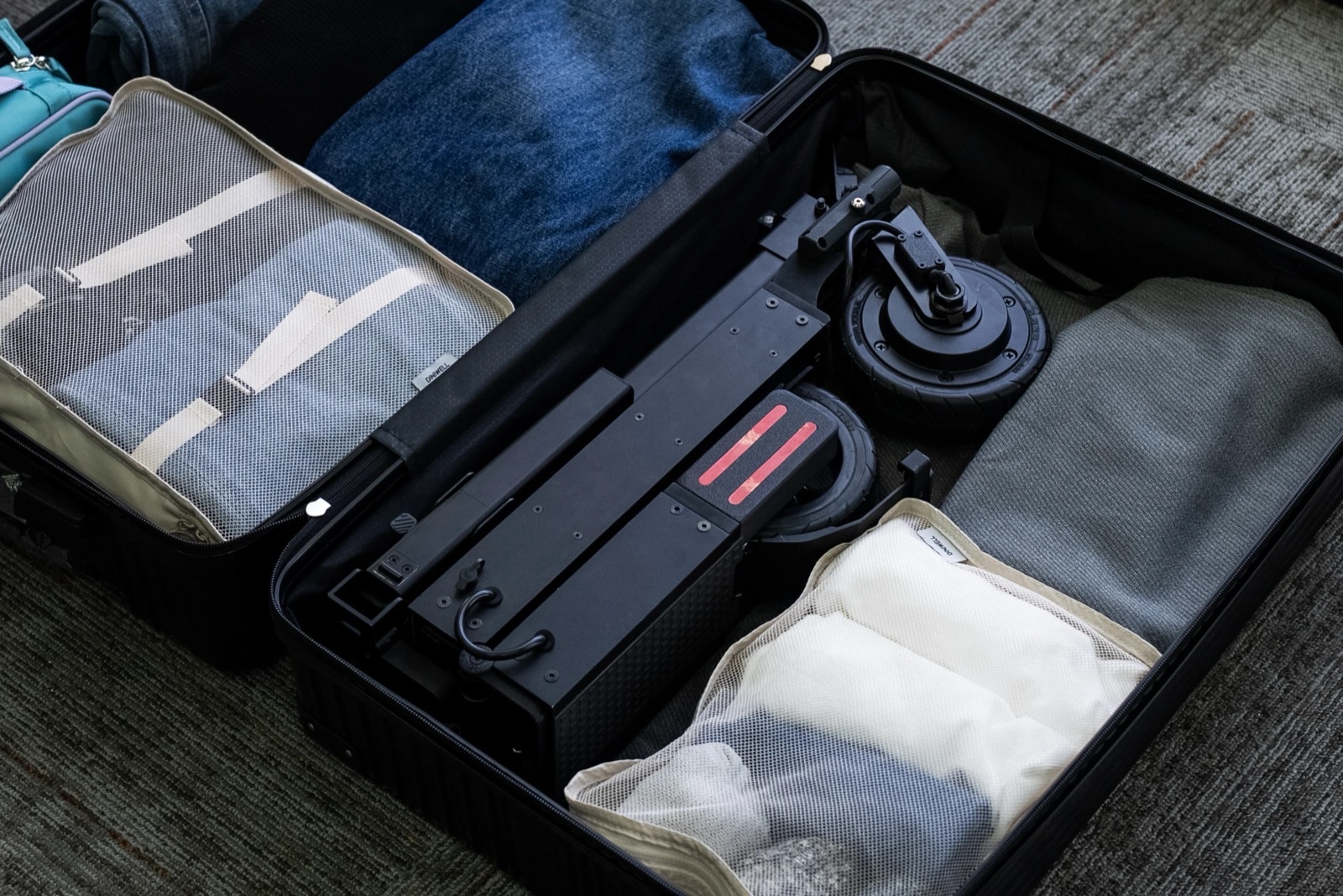
Photo: Blizwheel / Kickstarter, via New Atlas
That shift has real downstream effects worth taking seriously, beyond personal convenience. Every commuter who reliably swaps a short car trip for a folded scooter pulled out of a backpack is one fewer car circling for parking, one fewer contributor to the kind of short-hop congestion that clogs city centers far more than long commutes do. It's a small individual choice, but small individual choices at scale are exactly how urban traffic patterns actually shift — nobody solves gridlock with one big policy; they solve it with a thousand people quietly deciding the car wasn't necessary today. There's a financial angle stacked on top of that too: something this compact and this cheap to run chips away at the case for owning a second car, or any car at all, for people whose daily radius is mostly short, dense, urban trips.
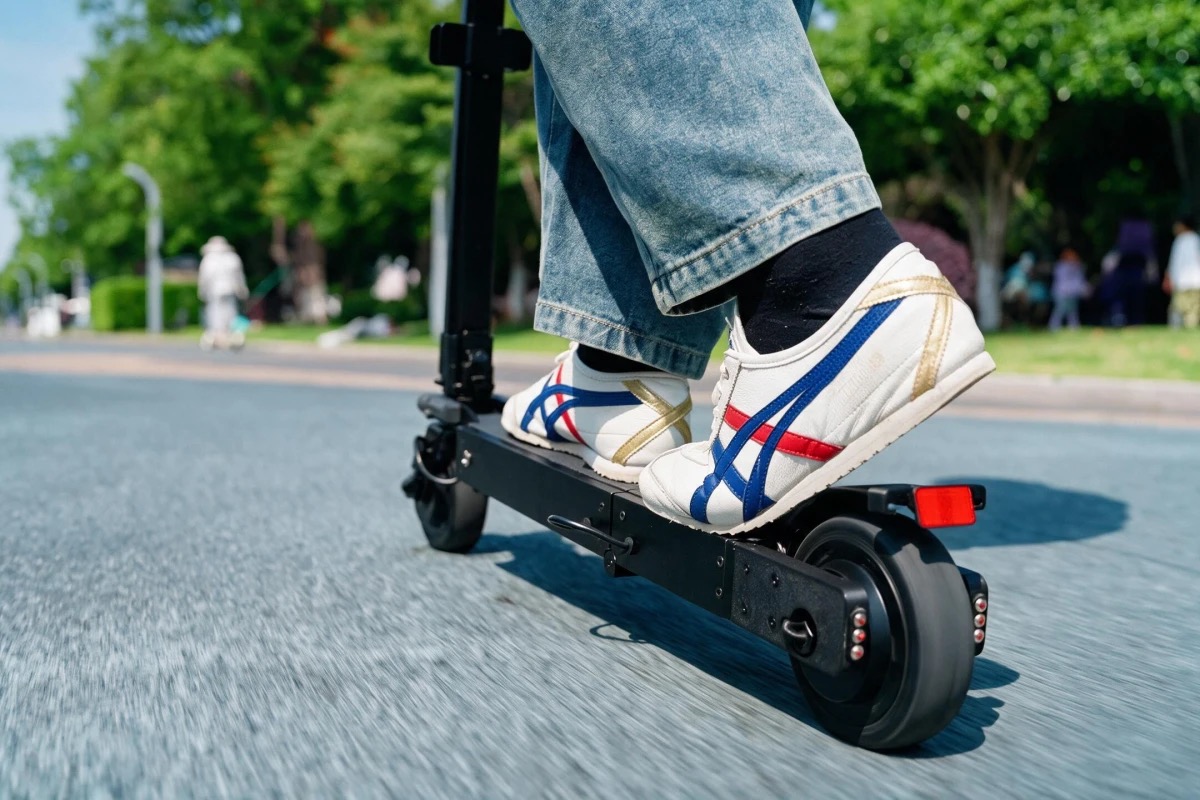
Photo: Blizwheel / Kickstarter, via New Atlas
Then there's the part worth flagging specifically for anyone thinking about brand strategy rather than just transportation: an object this deliberately designed doesn't stay in the "gadget" category for long. A scooter engineered with genuine design taste — the kind of restrained, aircraft-grade materiality that makes something look expensive and considered rather than merely functional — quietly becomes a style object as much as a mobility tool. That's exactly the kind of product a genuinely good creative director puts within reach, since owning one signals something about a person's taste and priorities, not just their commute.
Which points toward a real opportunity for brands watching from outside the transportation space entirely. A category built around this specific idea — compact, foldable, walk-transit-friendly mobility — isn't just an engineering niche. It's a genuinely fresh surface for partnership, and not only with the usual suspects. Travel brands have an obvious reason to care, given how directly this overlaps with luggage and last-mile airport logic. Fashion and apparel brands have a subtler one: a product this visually considered is a natural fit for a limited colorway or a co-branded carrying case, the same instinct that's made sneaker collaborations so durable for so long. Even hardware and lifestyle-tech brands building complementary carry gear — bags, cases, docking accessories — have a genuine opening here, since a new object category with real design ambition behind it is exactly the moment collaborators want to arrive early, not after the category's already crowded.
None of that requires the Blizwheel F0.5 specifically to become a household name. It just requires the idea underneath it — mobility small enough to disappear into daily life until the exact moment you need it — to keep gaining ground. Judging by how quickly compact, fold-first design keeps showing up across categories lately, that ground looks like it's already shifting.