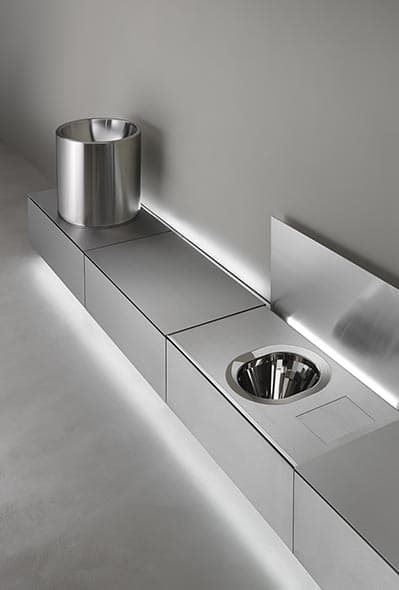
Photo: Cea Design
This Toilet Is So Well Disguised, Your Body Might Not Recognize It Either
There's a particular kind of confidence required to design a toilet that spends most of its life pretending not to be one. Italian manufacturer Cea Design has that confidence in spades with the Abaco system — a bathroom fixture built from stainless steel, engineered to fold away into something closer to a sleek architectural cabinet than anything you'd associate with plumbing, until the moment it's actually needed.
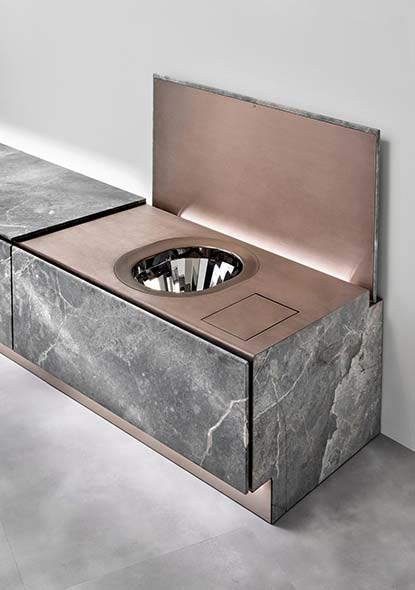
Closed, it reads as pure minimalist furniture — clean panels, no visible bowl, no obvious tell that a toilet lives inside at all. It can be finished in wood or marble to match a bathroom's broader material palette rather than sitting apart from it as an obviously utilitarian object. Open it up and the practical upgrades keep coming: a heated seat and an integrated bidet, both genuinely thoughtful additions rather than gimmicks. It's the kind of object that makes total sense in a glossy showroom photo, lit warmly, styled to within an inch of its life.
Enjoying this? Get new articles by email.
Photo: Cea Design
Here's the appreciative part, stated plainly: this is a genuinely smart piece of interior thinking. Bathrooms have historically been treated as the one room in a home where beauty takes a back seat to plumbing logic — pipes dictate layout, fixtures look like fixtures, and "hide the toilet" has mostly meant "put a door in front of the room," not "make the object itself disappear." Abaco treats the toilet as a design problem worth solving with the same seriousness as a kitchen island or a bookshelf, which is a rarer and more interesting ambition than it might first appear. Turning the least glamorous object in the house into something that visually earns its place in a considered interior is a genuinely good instinct, and better bathroom design overall benefits from more people trying.
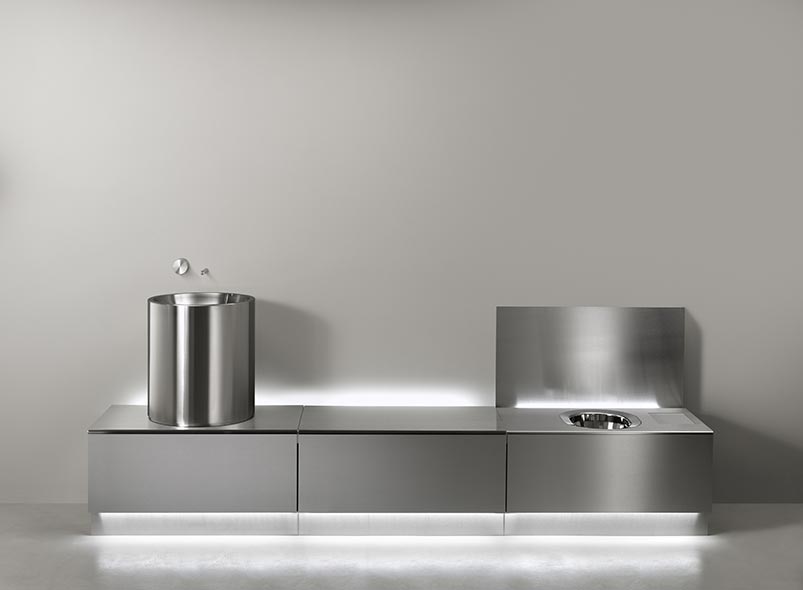
Photo: Cea Design
Now, the parts a showroom photo conveniently skips. Stainless steel is a phenomenal design material for exactly the reasons this piece leans on — clean lines, a cool architectural finish, genuine durability. It is also an extremely efficient conductor of temperature, which raises an entirely reasonable, entirely unglamorous question for anyone living somewhere that gets properly cold: what happens to bare skin meeting bare metal at two in the morning in January, with the heating not quite caught up yet? The heated seat presumably solves the seat itself, which is the actual point of contact — fair enough, credit where due — but any exposed metal surrounding it is still going to behave like metal in winter, and "beautifully disguised toilet" loses some of its romance the instant it also becomes "beautifully disguised ice block." Worth an honest engineering answer, not just a design render.
Then there's the less-discussed practical question any brand chasing this concept seriously needs to solve: smell management. A toilet that vanishes visually into a sealed-looking cabinet raises a fair follow-up about airflow and odor control — a fully enclosed object needs a genuinely well-engineered ventilation solution to avoid trading one problem (an unsightly fixture) for a different, worse one (a bathroom that smells like it's hiding something, because it literally is). None of that is a knock on the ambition. It's simply the unglamorous engineering homework that has to sit underneath any genuinely beautiful concept before it earns a permanent place in someone's actual daily bathroom routine, not just their design mood board.
None of which undoes the actual appeal here. There's something genuinely satisfying about a designer treating the most overlooked object in the home as worthy of real aesthetic ambition, rather than settling for "functional and forgettable." The idea is worth celebrating. It just needs a colder climate and a slightly less flattering bathroom to finish proving itself.