Photo: Tinder Japan
Tinder Opened a Fake Pharmacy That Prescribes Medicine for Being Bad at Dating
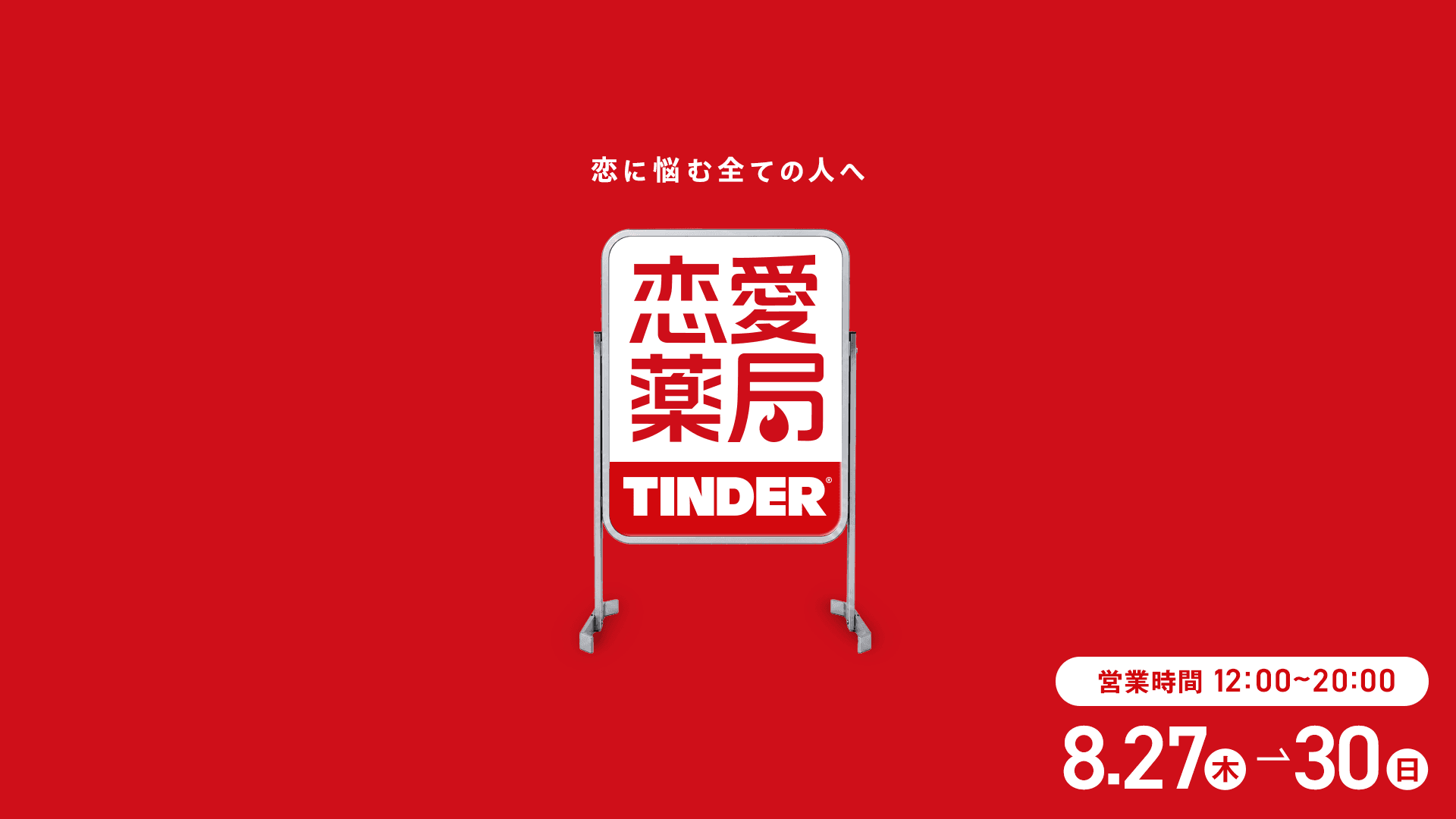
Most dating apps market themselves with a straightforward pitch: download this, meet someone. Tinder Japan's newest pop-up skips that pitch almost entirely and instead asks a much more specific, much funnier question: what if your fear of putting yourself out there could be diagnosed like a minor, treatable illness?
"Love Pharmacy" (恋愛薬局), running for four days in Shibuya, is built almost entirely around a real insight the brand had already collected from an earlier event: 75.6% of respondents said they wanted a new romantic connection this summer, but the single biggest reason people gave for not pursuing one — ahead of being busy, ahead of not meeting the right person — was a lack of self-confidence. That's a genuinely useful piece of research, and most brands would turn it into a single reassuring ad line. Tinder built an entire physical experience designed to walk someone through exactly that hesitation, symptom by symptom, until they've talked themselves into taking the next step.
Here's how the "treatment" actually works. Visitors browse 108 painfully specific "love symptom" cards — the kind of behavior nobody admits to out loud, like quietly testing how your name sounds next to someone's surname, or investigating a crush's online activity timestamps after they claimed to be asleep. You pick three that hit closest to home, scan them at a "romantic ailment diagnosis machine," and receive one of over 200,000 possible personalized "love charts" describing your current dating type and hang-ups. It's a small, clever piece of design: instead of the brand telling you what your dating problem is, you diagnose yourself, which makes the whole thing land as recognition rather than a sales pitch.
Enjoying this? Get new articles by email.
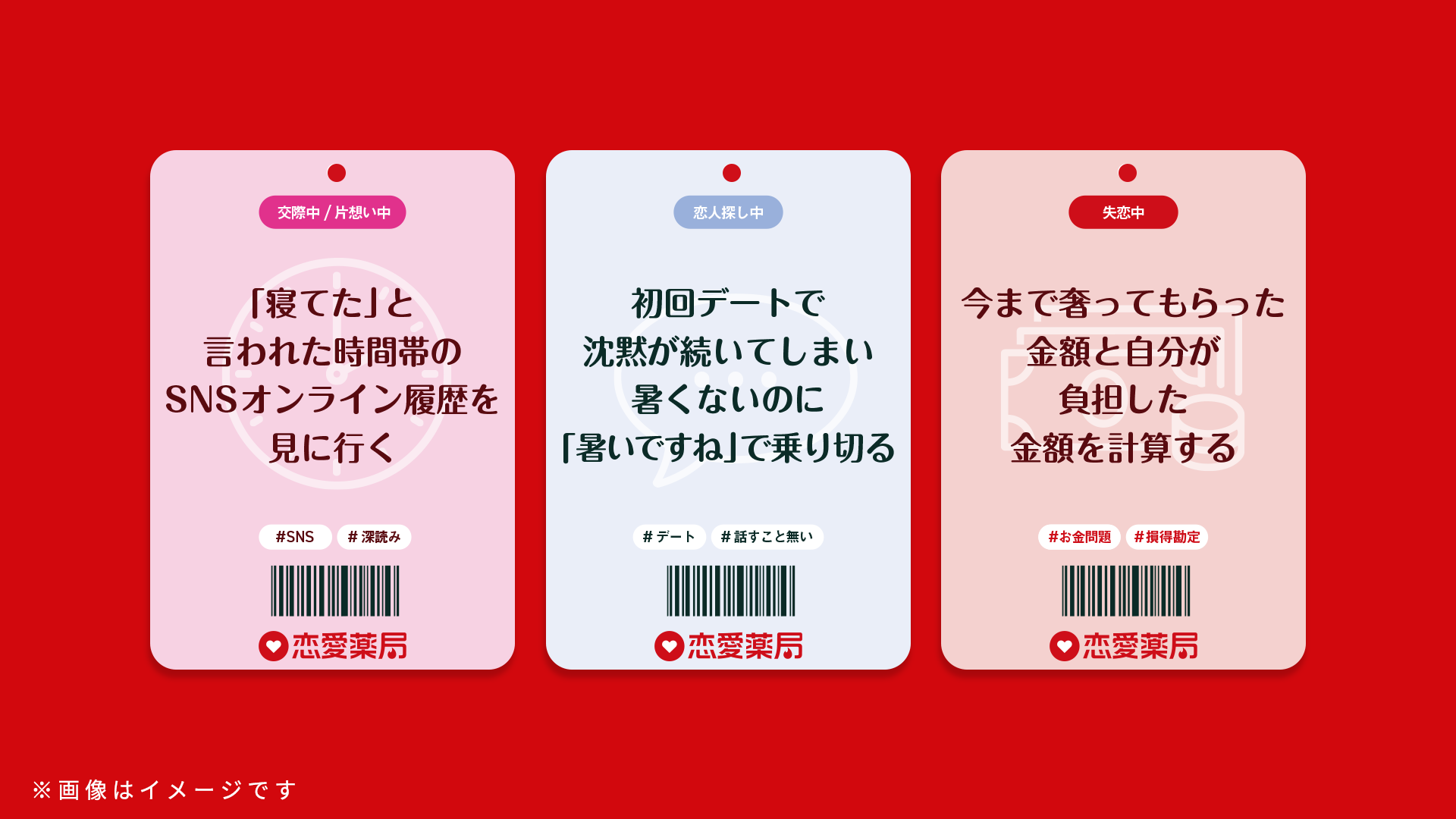
Photo: Tinder Japan
Then comes the actual prescription. Everyone gets a general "cheer-you-on" drink after their diagnosis — but the more specific treatment requires downloading the Tinder app and completing a profile first. Only then does a staff member in a lab coat run a short follow-up consultation and prescribe one of three love-support drinks, each with a name playing on the outcome it promises: one nodding to love fulfilling, one to actually meeting someone, one to a lighter heart. It's a genuinely well-hidden conversion funnel — app download and profile setup aren't advertised as "the goal," they're just the next step in a treatment plan you've already opted into emotionally.
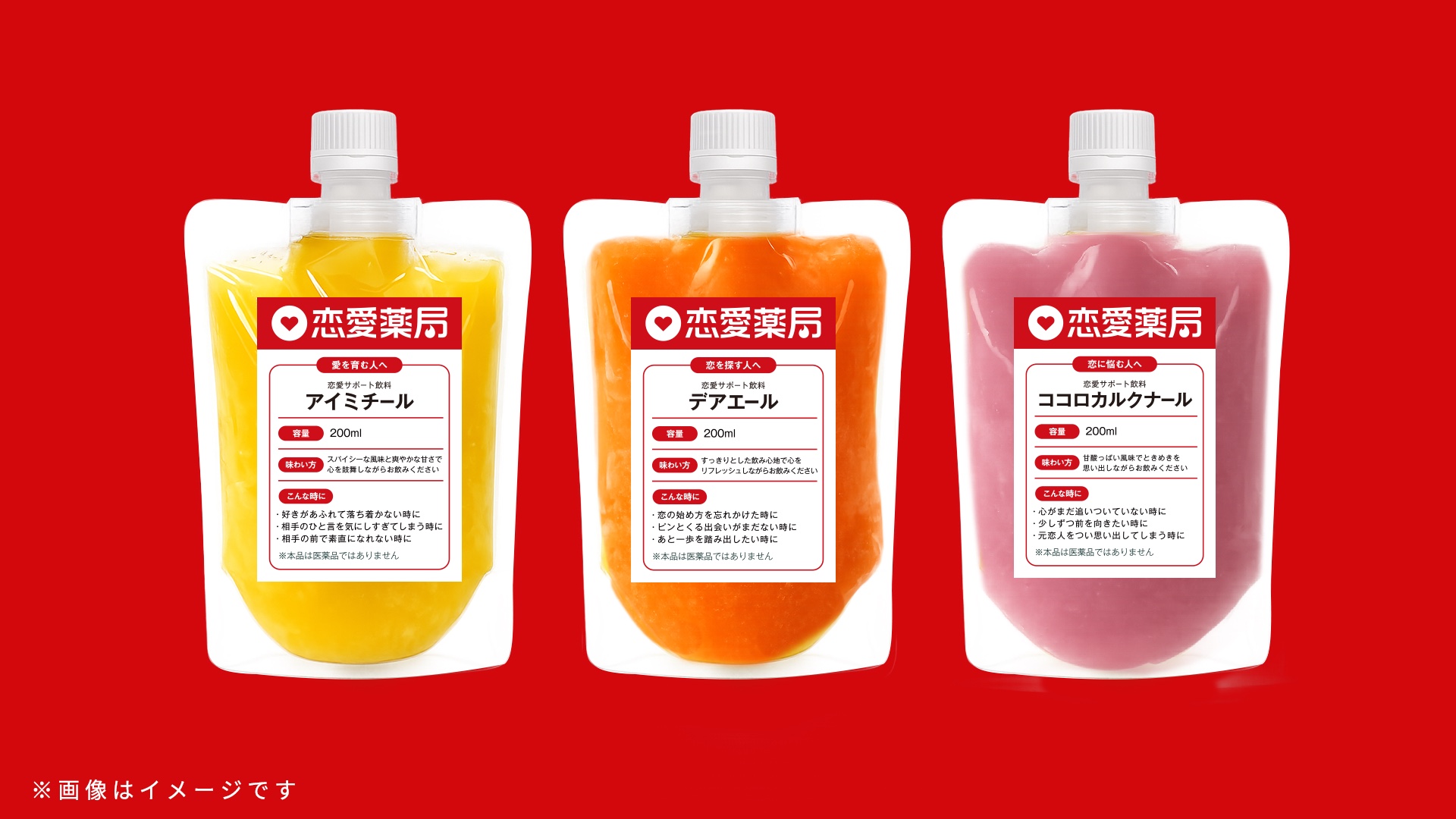
Photo: Tinder Japan
The setting does a lot of quiet work here too. The pop-up occupies the actual former site of Sanchi Pharmacy, a real drugstore that watched over Shibuya's scramble crossing for 72 years before closing — giving the whole bit a layer of genuine local nostalgia most temporary activations can't fake. Parody signage borrowed straight from real pharmacy conventions ("Stop Love Heatstroke," "A Second Opinion on Your Love Life") plays it commit-to-the-bit straight, down to original in-store jingles about romance looping over the PA system. Nothing about the format is winking at the audience; it's fully in character, which is exactly why it reads as charming rather than gimmicky.
What makes this genuinely worth studying, beyond being a fun pop-up, is how completely it replaces persuasion with participation. Tinder never has to argue that its users should feel more confident — the entire mechanism does that work by having someone select their own symptoms, receive their own diagnosis, and walk away with something that quite literally required "signing up for treatment" (the app) to receive fully. That's a genuinely transferable idea for any brand whose product touches something emotionally loaded — dating, fitness, financial anxiety, career indecision. The lesson isn't "build a pop-up." It's: find the specific, unglamorous hesitation your audience already feels, give people permission to name it themselves, and let your actual product be the thing that shows up right when they're ready, not the thing being pushed on them the whole time.