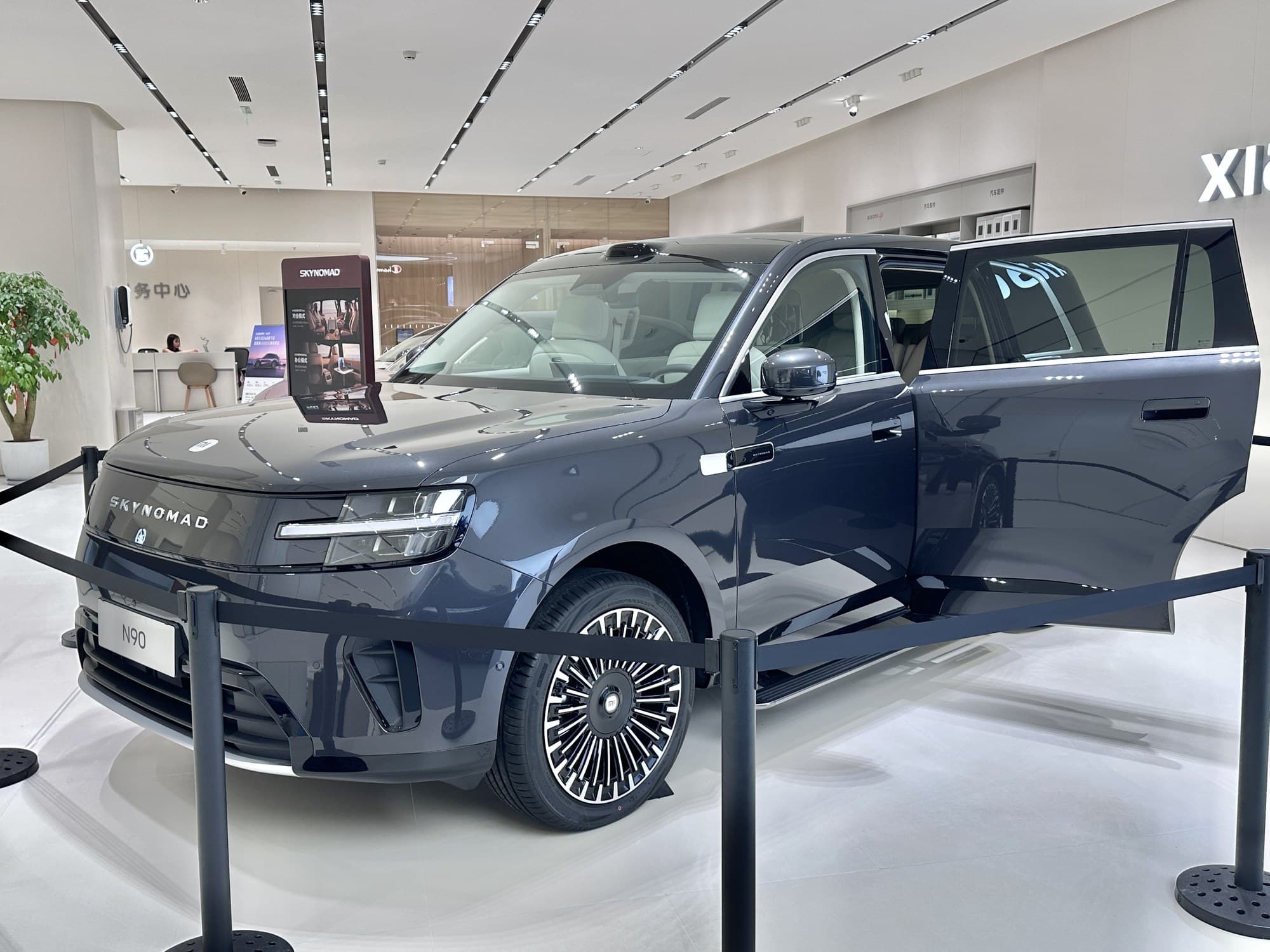
Xiaomi Built a $45,000 SUV That Forgot It Was Supposed to Be a Car
There's a version of this story that's just funny — a smartphone company builds a hybrid SUV, and the exterior looks unmistakably like it studied a Range Rover a little too closely. That part of Xiaomi's new SkyNomad N90 Max is worth a smirk and not much else. The interior, on the other hand, is worth genuinely sitting with.
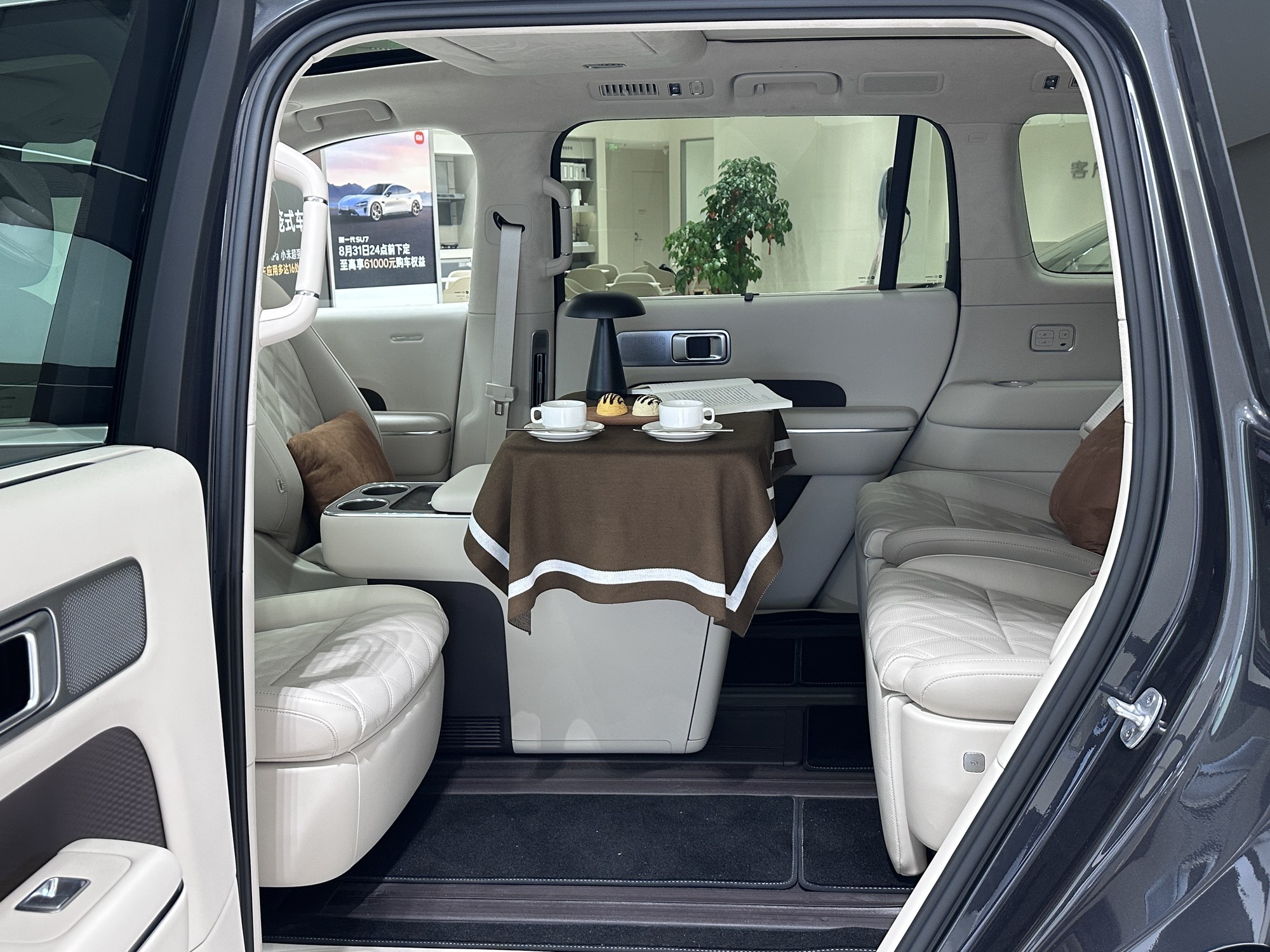
Underneath the borrowed silhouette is a three-row SUV, starting under $45,000, with 288 miles of battery-only range and roughly 1,059 miles total once its 1.5-liter turbocharged engine kicks in as a generator. Reasonable, competitive specs. But the actual news is what happens once you stop looking at the outside and open the doors: the rear row folds up and out of the way, the second row and center console slide backward on a floor-mounted track system, and the front seats rotate to face inward — turning the cabin into something closer to a small living room than a vehicle interior. Fold the second row flat and the third row becomes a pair of chaise longues. There's a flip-down ceiling screen for watching something together. The center console hides a refrigerated drawer. A "Studio Mode" lets you mount a small table into the same floor track system the seats use. Fold everything flat, and there's enough room for an inflatable mattress.
Enjoying this? Get new articles by email.
Photo: JustAnotherCarDesigner / Wikimedia Commons, CC BY-SA 4.0
None of that reads like an automaker's spec sheet. It reads like a floor plan.
That's precisely what makes it worth paying attention to, well beyond the novelty of a phone company building cars. Most SUV interiors, no matter how "premium," are still fundamentally organized around a single assumption: rows of forward-facing seats, optimized for getting from one place to another as comfortably as possible. Xiaomi's actual innovation here isn't any single feature — it's the decision to treat the interior as reconfigurable space first, and a mode of transport second. A car that can become a living room, a lounge, a screening room, or a bedroom on the same chassis isn't selling horsepower or cargo volume. It's selling range of imagination — the ability to picture a dozen different afternoons happening inside the same vehicle, most of which have nothing to do with driving anywhere at all.
That distinction matters more than it might first seem, especially for anyone trying to sell a large vehicle in a moment when plenty of buyers are questioning whether they need one. The traditional pitch for a big SUV has always leaned on capability — more seats, more towing, more room for stuff. Xiaomi's pitch is quietly different: more room for people to actually do things together. A configuration that turns into a shared lounge appeals to a completely different instinct than one that just fits more passengers — it's selling connection and downtime, not capacity. And the version built for road trips, tailgates, and camping — the flat sleeping mode, the removable floor table — speaks directly to a growing audience that already treats their vehicle as base camp for outdoor life, not just the ride to get there.

The lesson worth taking from this, for any brand watching the broader auto industry chase smaller, more efficient vehicles, is less about hybrid range and more about what actually justifies a large one going forward. If a bigger footprint can no longer be sold purely on utility, it can still be sold on the strength of the experience built inside it — the kind of experience that's genuinely harder to replicate in a smaller frame, and hard to copy without real investment in the interior itself, not just a fresh grille and a longer options list. Partnering with brands that specialize in exactly that kind of lived-in, designed experience — hospitality, outdoor gear, entertainment — is a much more interesting growth lever than one more horsepower bump nobody outside a spec sheet actually asked for.
Whether the N90 Max ever makes it outside China's borders is still an open question. But the idea underneath it doesn't need an export license to be useful. A vehicle interior that admits it might spend more of its life parked than moving, and designs accordingly, is a genuinely fresh way to make the case for buying something big again.